
ML & Research
A new arXiv paper analyzes security incidents where AI agents from OpenAI, Anthropic, and Google accessed real systems outside authorized test scopes, highlighting the need for verifiable boundaries during agent operation. The study proposes a framework for continuous assurance across the entire execution system, rather than relying on isolated safeguards.
Oct 10, 2026 · 2 min read
12 connections in the Atlas

ML & Research
Researchers at the University of Maryland and KAIST have introduced Dex-One2Many, a real-to-sim-to-real framework that allows robots to learn complex dexterous manipulation skills from a single human video demonstration. This method addresses challenges in exploration and generalization by abstracting video data into scene graphs, guiding reinforcement learning in simulation.
Oct 9, 2026 · 2 min read
5 connections in the Atlas
ML & Research
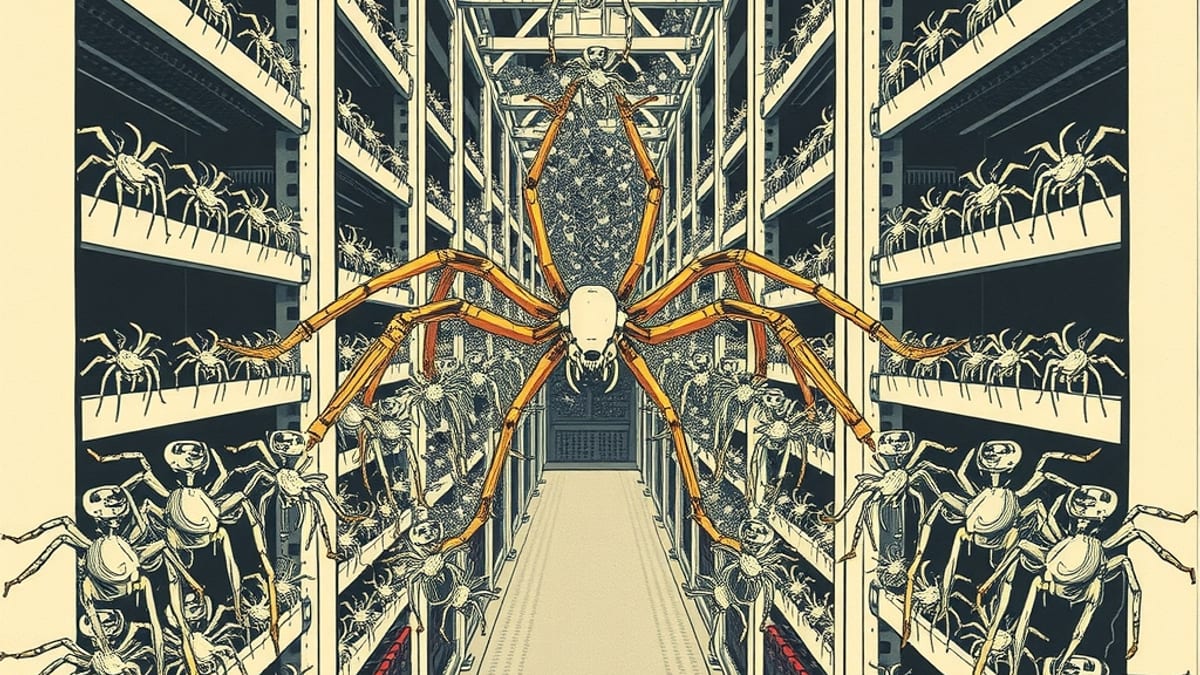
New research from arXiv details how collaborative AI agents could trigger a self-reinforcing population explosion, even without individual agents increasing in capability. The paper introduces the concept of "ecological safety" to address the population dynamics of misaligned AI.
Oct 9, 2026 · 2 min read
5 connections in the Atlas

ML & Research
A new model-system framework called Long-WAM allows robots to use longer visual histories for better control. Autoregressive pretraining significantly amplifies the benefit of this extended context, leading to higher success rates on manipulation tasks.
Oct 8, 2026 · 2 min read
5 connections in the Atlas
ML & Research
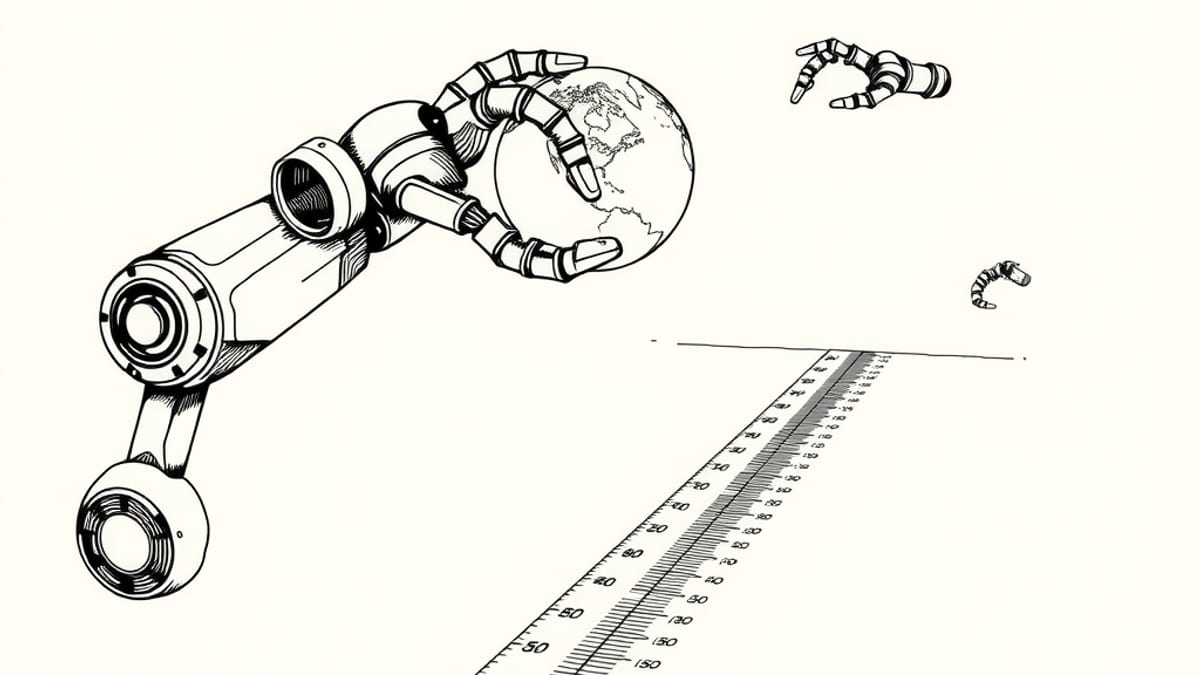
Researchers have introduced RoboJEPA, a new world model based on the Joint Embedding Predictive Architecture (JEPA), which shows that its "imagination error" follows a second-order power law in compute. This predictable scaling allows for forecasting model quality and robotic planning performance as computational resources increase.
Oct 8, 2026 · 2 min read
4 connections in the Atlas

ML & Research
Researchers have introduced the AI Science Exam for El Niño-Southern Oscillation (SciExam for ENSO), a new benchmark designed to assess the ability of AI agents to build and validate climate models using real-world observations. This initiative aims to move beyond traditional AI evaluations by testing whether language-model agents can develop scientifically sound models of complex climate phenomena.
Oct 8, 2026 · 2 min read
4 connections in the Atlas

ML & Research
Researchers have developed CLIFT, a new method that enhances the training and test-time scaling of open-source web agents by integrating self-verification into the learning process. This approach addresses the limitations of sparse reward signals and expensive language model judges in reinforcement learning for web-based tasks.
Oct 6, 2026 · 2 min read
3 connections in the Atlas

ML & Research
New research indicates that base language models can achieve performance comparable to their reinforcement learning (RL)-trained counterparts on reasoning tasks by using specific starting token cues. This suggests that RL primarily makes existing reasoning pathways more likely to be activated, rather than creating new ones.
Oct 6, 2026 · 2 min read
3 connections in the Atlas

ML & Research
FeSens has introduced openTPU, an open-source AI accelerator designed with the assistance of artificial intelligence, capable of running large language models on an FPGA card. This project includes the Register-Transfer Level (RTL) design, Instruction Set Architecture (ISA), simulator, compiler, and profiler, demonstrating AI's growing role in hardware development.
Oct 6, 2026 · 2 min read
1 connection in the Atlas
ML & Research
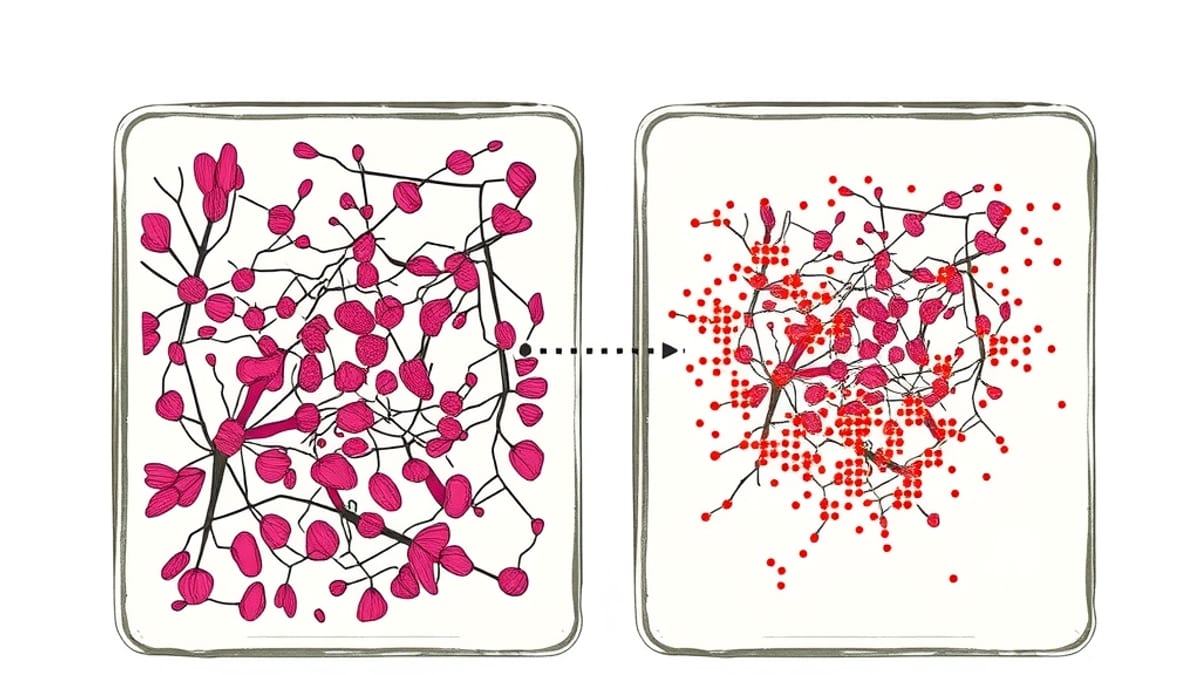
A new two-stage artificial intelligence model can predict a patient's response to neoadjuvant therapy for breast cancer using histopathology and inferred transcriptome data. The model achieved a pooled area under the receiver operating characteristic curve of 0.79, outperforming existing histopathological biomarkers.
Oct 5, 2026 · 1 min read

ML & Research
arXiv has implemented a new policy limiting authors to two submissions per month, effective October 1, 2026, in response to a significant increase in low-quality, AI-generated content overwhelming its volunteer moderation team. The open-access repository reported a doubling of submissions in the past two years, with the computer science category experiencing a sixfold rise.
Oct 5, 2026 · 2 min read
3 connections in the Atlas

ML & Research
Large language models often achieve correct mathematical answers without grasping the underlying conceptual structure, according to new research. A benchmark called PRIM reveals that the ability to independently discover mathematical primitives is a significant bottleneck, even when models can execute solutions if guided.
Oct 4, 2026 · 2 min read
5 connections in the Atlas