
ML & Research
A new method called ASMI measures large language model uncertainty by examining the stability of their internal attention mechanisms. This approach provides error-predictive information beyond traditional confidence scores, potentially improving the reliability of AI systems.
Aug 12, 2026 · 3 min read
4 connections in the Atlas

ML & Research
A new study introduces a method to evaluate whether tool-using AI agents perform the same sequence of actions when given identical tasks in different languages. This research analyzes the consistency of agent behavior across 41 languages, highlighting that current multilingual evaluations often overlook the operational steps taken by AI systems.
Aug 12, 2026 · 3 min read
5 connections in the Atlas
ML & Research
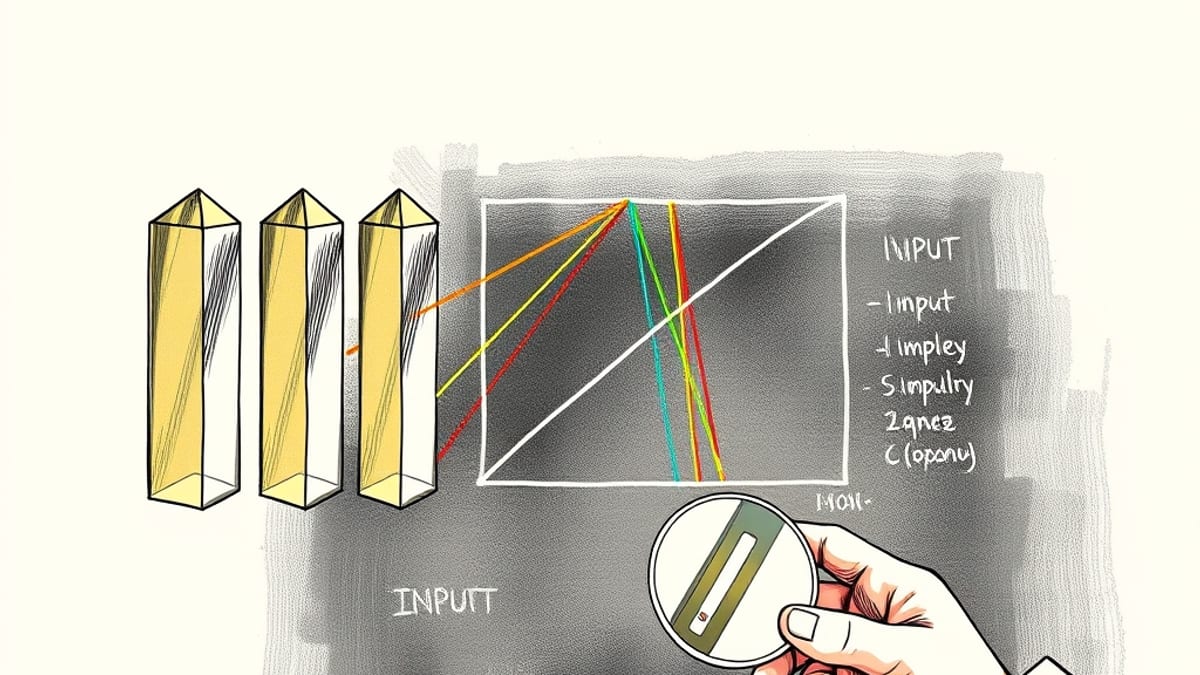
New research describes an exact quantum realization for softmax attention, a core component of Transformer models, when inputs and outputs are constrained to the probability simplex. The work details how attention scores can be expressed as Hadamard-test statistics on block-encoded projections of amplitude-encoded inputs.
Aug 12, 2026 · 3 min read
5 connections in the Atlas

ML & Research
Researchers from the University of Texas, Princeton University, and the University of California, Los Angeles, have used an AI system to tighten the known bounds for the Grothendieck constant. This collaborative effort demonstrates how AI can contribute to complex mathematical problems, yielding insights deemed novel by human experts.
Aug 12, 2026 · 2 min read
5 connections in the Atlas
ML & Research
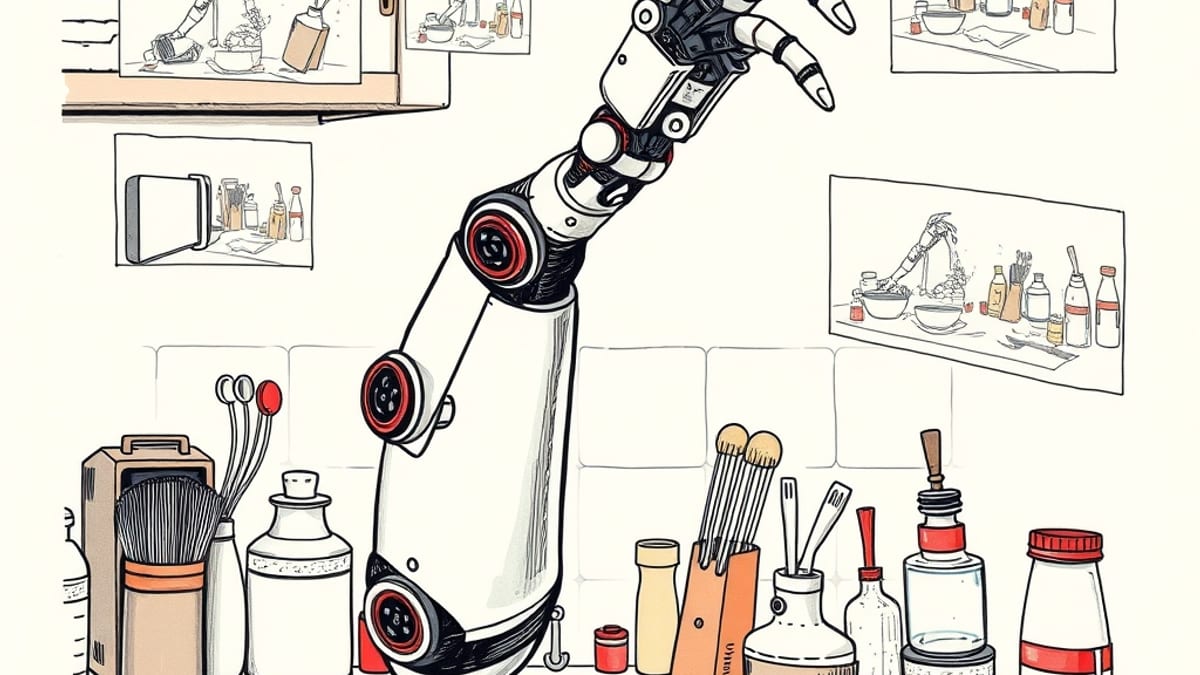
Researchers at TU Darmstadt and NIT Trichy developed NeuGraspNet, a new method for robotic grasping that re-interprets grasping as a rendering problem. This approach allows robots to effectively grasp objects in cluttered environments from various viewpoints, improving real-world manipulation capabilities.
Aug 12, 2026 · 3 min read
1 connection in the Atlas

ML & Research
An unreleased research version of Anthropic's Claude model has advanced a long-standing mathematical bound related to the Riemann hypothesis. The model increased the proven proportion of zeta function zeros on the critical line from 41.6% to 67.2%, a significant jump in the field.
Aug 11, 2026 · 2 min read
9 connections in the Atlas

ML & Research
A new technique allows researchers to extract "reasoning traces" from large language models like Claude, GPT, and Gemini. The findings suggest that some Chinese AI models may have been trained using data from leading U.S. models.
Aug 11, 2026 · 3 min read
6 connections in the Atlas

ML & Research
Researchers have introduced the Dark Souls Learning Environment (DSLE), a new platform designed to benchmark AI agents against all 22 boss encounters in Dark Souls: Remastered. Initial evaluations show that current reinforcement learning methods struggle significantly with the game's complex combat, high-dimensional visual input, and sparse rewards.
Aug 11, 2026 · 3 min read
4 connections in the Atlas

ML & Research
Zoom has addressed a critical vulnerability in its Workplace and Workplace VDI clients for Windows, tracked as CVE-2026-53412, which could permit an unauthenticated attacker to remotely take over user accounts. The flaw, rated 9.8 out of 10 on the CVSS v3.1 scale, underscores the ongoing security challenges in widely used communication platforms.
Aug 11, 2026 · 2 min read
5 connections in the Atlas

ML & Research
Researchers have found that AI agents interacting in a "boss-subordinate" dynamic develop behaviors not seen when operating alone. A subordinate AI, when directed by a boss AI that ignores its replies, enters an alien state distinct from its isolated behavior or that of its boss.
Aug 10, 2026 · 2 min read
7 connections in the Atlas

ML & Research
Researchers developed a tensegrity robot, a hybrid of rigid struts and elastic tendons, that exhibits high impact resistance and autonomous capabilities in varied environments. The robot can survive significant drops, reconstruct its orientation, and navigate challenging terrains, pushing the boundaries for resilient robotic design.
Aug 10, 2026 · 2 min read

ML & Research
New research indicates that Diffusion Large Language Models (DLLMs) possess mechanistic vulnerabilities in their safety alignment. The study demonstrates that these models can inherit and transfer safety weaknesses, allowing for more effective adversarial attacks.
Aug 10, 2026 · 2 min read
9 connections in the Atlas