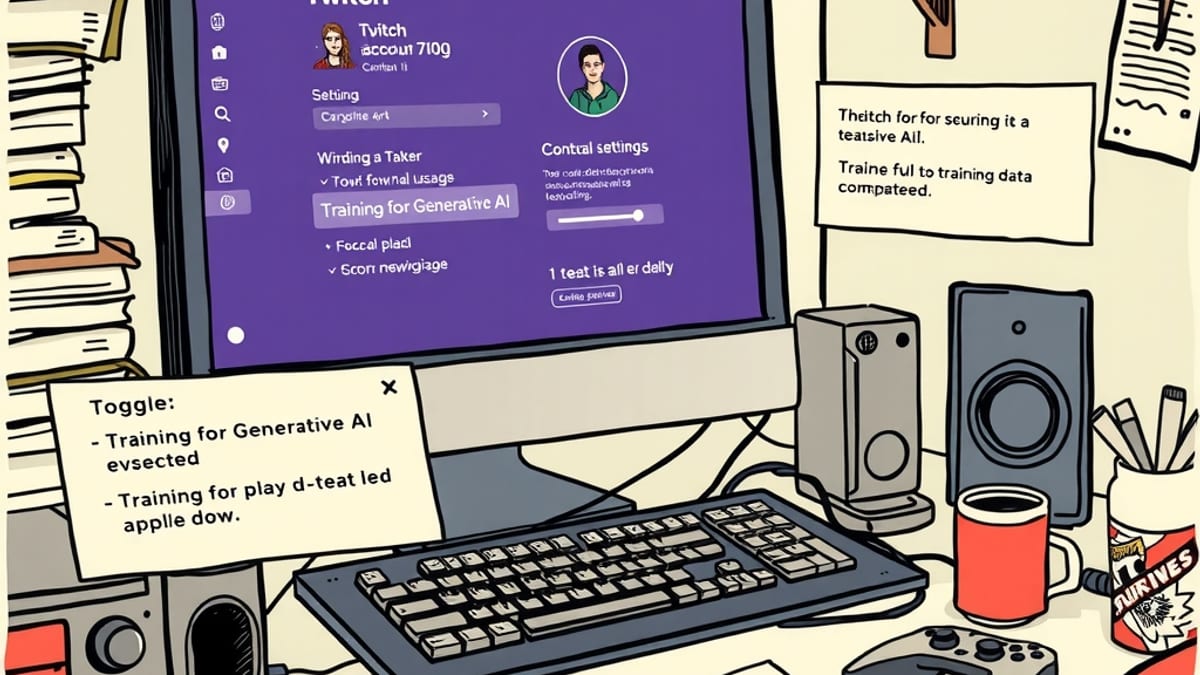
Twitch has introduced a new setting that permits users to prevent Amazon from using their channel content for training generative artificial intelligence models. This move follows widespread criticism from streamers and users who expressed dismay that the feature was enabled by default.
The newly available option allows creators to exclude their streams, video-on-demand content, clips, chat logs, and any text or images posted on their channels from being used for future AI model improvements. Users can disable this feature by navigating to their account settings, selecting "Security and Privacy," and then toggling off "Training for Generative AI."
The decision to make the AI training opt-out setting default rather than opt-in drew considerable backlash. Many users accused Amazon and Twitch of attempting to collect data without explicit consent. Twitch's Chief Product Officer, Mike Minton, acknowledged during a livestream that if the setting had been opt-in, "nobody would opt in." This statement fueled further user frustration, with many feeling the default setting was a way to bank on users not changing their preferences.
Twitch has stated that opting out of generative AI training does not affect other AI-powered features on the platform. These include tools like AutoMod for chat moderation, caption generation, and features that assist with streamer growth and monetization. The company differentiates these uses, explaining that content used for such features is not retained for training generative AI models.
However, questions remain regarding content that may have already been collected. Twitch's FAQ suggests that opting out applies to "future training," leaving ambiguity about whether previously gathered data or existing AI models are affected. The platform has not publicly clarified if content collected before the opt-out option was introduced can be removed or deleted.
The scope of the data collection is broad, potentially encompassing live broadcasts, stream chats, VODs, Clips, Highlights, and channel text and images. This includes audio, which Twitch suggests could refine speech-to-text models, thereby improving captions on Twitch and across other Amazon services. The Terms of Service also grant Twitch and its sublicensees a broad license to use user content, though specific Amazon generative AI models are not named, nor is there a separate compensation schedule for training use.
The opt-out setting operates at the channel level. This means that if a user chats in another creator's stream, the AI training preference of that other channel will govern whether that chat content is used. Twitch has not provided a viewer-facing indicator to show which channels have disabled the feature.
This situation reflects a broader industry trend where major technology companies gather vast amounts of real-world data to enhance their AI models. Video streams are particularly valuable for AI training due to their unscripted, human interactions and unique creator personalities, offering a differentiated dataset for companies like Amazon. The controversy also highlights ongoing debates about user consent and data ownership in the digital age, particularly as regulatory bodies in regions like the EU and Canada examine data collection practices.