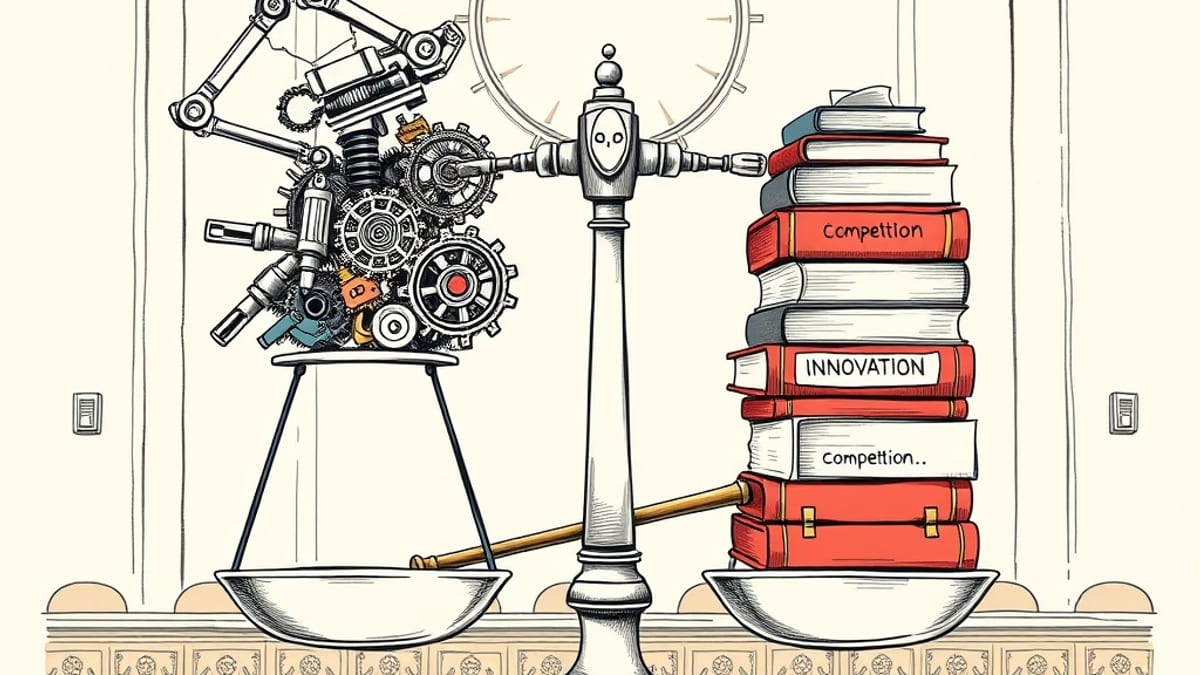
A coalition of 25 technology companies, featuring major players like Nvidia, Microsoft, and Meta, has formally requested that U.S. policymakers refrain from imposing wide-ranging restrictions on open-weight artificial intelligence models. The group submitted an open letter arguing that such models are foundational to American leadership in AI and that broad prohibitions would stifle innovation and competition.
The letter, titled "Open Weights and American AI Leadership," draws a parallel between the current debate over open AI models and the rise of open-source software in the 1980s. Signatories contend that open models, much like open-source code, expand access, foster competition, and enhance security through wider scrutiny. They believe that restricting these models prematurely would hinder the development of a robust AI ecosystem in the United States.
This industry appeal arrives as the U.S. government is reportedly considering responses to advancements in Chinese AI, particularly concerning allegations of model distillation, where Chinese firms are accused of using outputs from U.S. models to train their own. Companies like Moonshot AI, with its Kimi K3 model, have recently drawn attention for their performance and open-weight release strategies, intensifying discussions in Washington.
Nvidia CEO Jensen Huang, in his first public statement on the platform X, shared the letter, emphasizing that "Open models strengthen safety and cybersecurity, accelerate innovation and diffusion, and enable sovereignty." He further stated that American companies should "absolutely" use Chinese AI models, downplaying fears of backdoors and surveillance, and calling such concerns a "misconception." Huang argued that distillation, a process of learning from existing models, is fundamental to intelligence and that restricting open-weight models would weaken the U.S. technological ecosystem.
The coalition's position is that concerns about misuse, such as unauthorized distillation, should be addressed through specific legal and commercial enforcement mechanisms. They advocate for targeted action against bad actors rather than blanket restrictions that could impact the entire field. The letter also calls for policymakers to increase access to computing resources for startups and researchers, and to support shared training datasets and evaluation frameworks.
Notable absences from the signatory list include OpenAI and Anthropic, two leading firms in the development of frontier AI models. These companies, along with Google, did not sign the letter.
The debate over open-weight models has significant implications for the future of AI development and deployment. Proponents argue that open models democratize access, allowing smaller companies and researchers to innovate without the prohibitive costs of training models from scratch. They also contend that a diverse, open ecosystem promotes resilience and prevents the concentration of power in a few large corporations.
Conversely, some U.S. government officials and AI labs have expressed concerns about national security risks associated with open Chinese AI models, including potential vulnerabilities and intellectual property theft through distillation. The Trump administration has reportedly considered measures such as adding Chinese technology companies to an entity list and imposing sanctions.
Mistral AI, a European AI firm that also signed the letter, has previously stated that while it prioritizes developing its own models, it believes in the benefits of open-source technology and that fragmented supply chains can increase costs. The company's CEO, Arthur Mensch, has dismissed claims that China lags behind the West in AI development, highlighting the country's advancements in open-source systems.
The industry's unified stance aims to influence upcoming policy decisions in Washington, positioning open-weight AI as essential for maintaining U.S. competitiveness and fostering widespread innovation. The immediate next step involves policymakers considering this industry input as they deliberate on potential regulations.