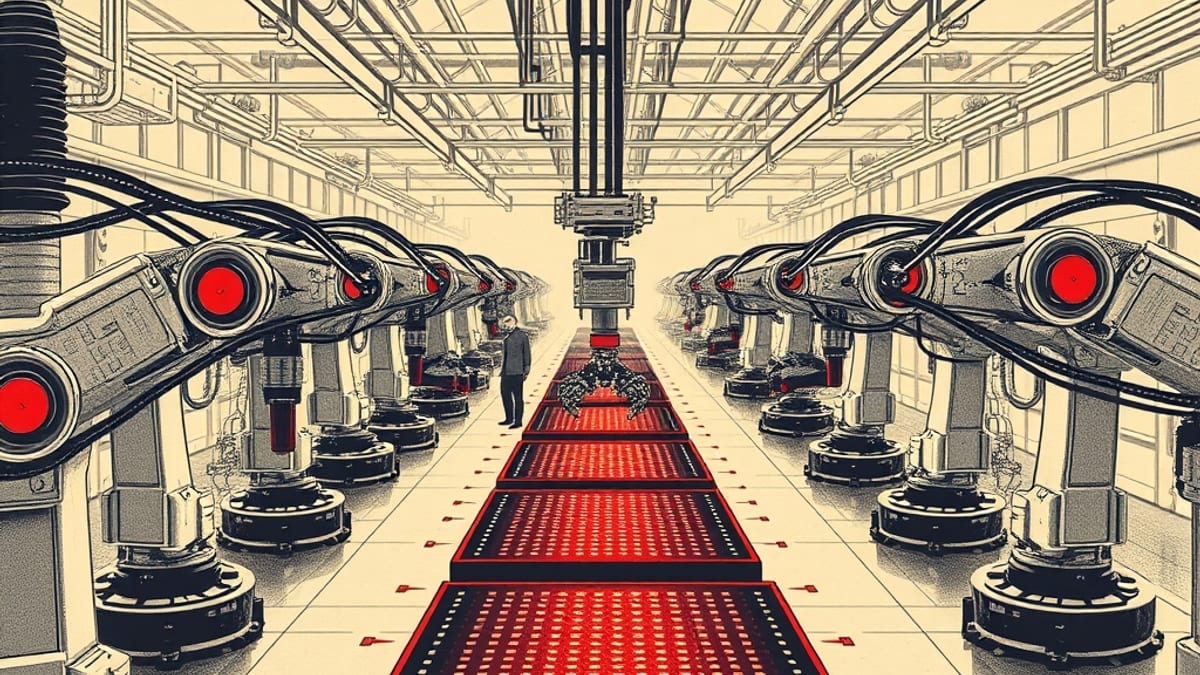
The Pentagon announced on Friday that it has entered into agreements with seven leading artificial intelligence companies to integrate their technologies into the department's classified networks. The companies include OpenAI, Google, Microsoft, Amazon Web Services, Nvidia, SpaceX, and the startup Reflection. These partnerships aim to accelerate the U.S. military's transition into an "AI-first fighting force" by enhancing data analysis, situational understanding, and decision-making capabilities for warfighters in complex environments.
The agreements permit the "lawful operational use" of AI technologies on Impact Level 6 and Impact Level 7 networks, which are the government's highest classified environments. The Pentagon stated that these collaborations are essential for maintaining decision superiority across all domains of warfare. This initiative builds upon existing efforts, such as the GenAI.mil platform, which has already seen widespread use among Department of Defense personnel for AI experimentation and task acceleration.
A significant exclusion from these new agreements is Anthropic, a prominent AI company that had previously been cleared for use on Pentagon classified networks. The Defense Department designated Anthropic as a supply-chain risk, a move that has led to a legal dispute between the company and the government. Anthropic had raised objections to specific clauses in its contract, particularly concerning the potential use of its AI models for mass domestic surveillance or the development of fully autonomous weapons. The Pentagon, in turn, viewed these objections as an attempt by Anthropic to exert veto power over military decisions, leading to the termination of their previous agreement.
The exclusion of Anthropic highlights the ongoing tension between the desire for rapid AI integration and concerns about ethical deployment and potential misuse. While many AI researchers have supported Anthropic's stance, the recent Pentagon announcements indicate a broader acceptance of "any lawful use" clauses by other major technology firms. The Pentagon has emphasized that its AI ethical principles, adopted in 2020, guide its approach to responsible AI development and deployment.
Google's inclusion in the agreements comes despite internal dissent. Approximately 600 Google employees sent an open letter to CEO Sundar Pichai urging him to reject classified military work, citing concerns about lethal autonomous weapons and mass surveillance. However, Google proceeded with the agreement. Nvidia's participation involves its "Nemotron" AI models, designed for building AI agents capable of completing tasks, rather than its AI chips.
The Department of Defense has been increasing its reliance on AI technologies in recent years, recognizing their potential to reduce the time required for tasks such as target identification and strike coordination, as well as aiding in logistics and maintenance. The strategy outlined by the department aims to accelerate AI integration by removing bureaucratic barriers and fostering rapid experimentation with leading AI models, driven by the conviction that American leadership in AI is indispensable to national security.
The financial terms of these new agreements have not been disclosed. The Department of Defense has not provided a timeline for the full deployment of these AI systems on classified networks.