OpenAI, PerturbAI, and Scripps Research announced on October 21, 2026, that they have used a distributed AI reasoning framework to uncover new insights in biological data. This framework, powered by GPT-Rosalind agents, analyzed a whole-brain genomic dataset from millions of mouse brain cells. The AI agents completed this analysis in 32 minutes, a process that researchers estimate would take human analysis and literature review months to a year for a single gene disruption.
The project, which builds on a year-long collaboration, addresses a growing challenge in biomedical research: the volume of data generated by modern experiments often exceeds scientists' capacity for interpretation. The AI agents were tasked with interpreting experimental data, connecting findings with scientific literature, and generating testable hypotheses.
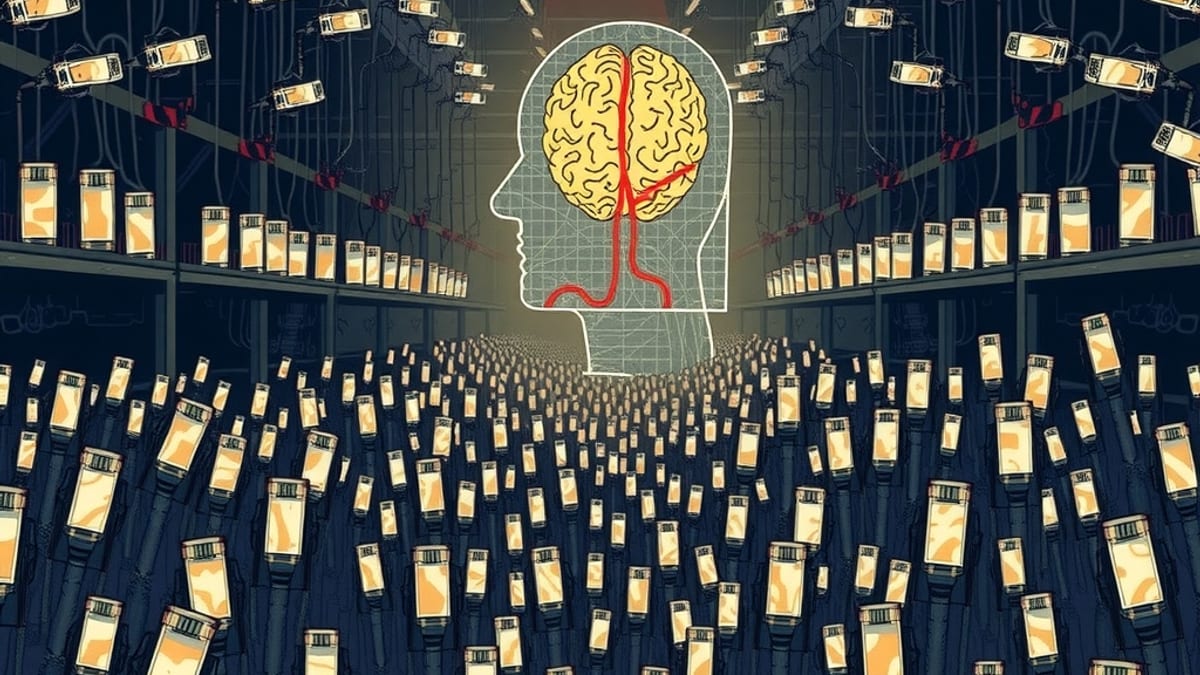
The distributed biological reasoning approach involved assigning many AI agents to individual aspects of an experiment. Each agent investigated a specific gene disruption, analyzed cellular responses, searched scientific literature, and proposed explanations for the observed results. These individual reports were then combined to create a "reasoning atlas" that links genes, cellular effects, relevant publications, and potential biological mechanisms.
The AI agents identified unexpected differences in how two disease-linked genes, Tsc1 and Tsc2, affect brain cells. While both genes control mTOR, a regulator of cell growth and metabolism, disrupting Tsc2 affected dozens of neuronal-communication genes in the cerebellum, whereas Tsc1 caused minimal change. The agents also uncovered a potential link between cholesterol regulation and neurodegeneration, suggesting a new research direction focusing on whether DCTN1 disruption alters cholesterol distribution within neurons.
Researchers can access this reasoning atlas to explore the findings, compare related genes, investigate unexpected responses, and identify new leads for further study. OpenAI states that the opportunity extends beyond faster data analysis, aiming to combine AI with experimental biology, human expertise, and scientific literature to help scientists convert more data into testable ideas.
In a comparison, distributed agents cited over 700 references, significantly more than the 11 cited by a single-agent model. Blinded human experts preferred the interpretations provided by the distributed agents 75% of the time, indicating the method's effectiveness in analysis breadth and research utility.
This development follows OpenAI's introduction of GPT-Rosalind in April 2026, a reasoning model designed for biology and drug discovery research. OpenAI has also launched the Rosalind Academic Plan to provide academic labs with access to these AI tools, aiming to support foundational research and accelerate scientific discovery. The company recently acquired Orchestra Bio, a drug development software startup that uses AI agents to monitor studies and manage drug development programs.