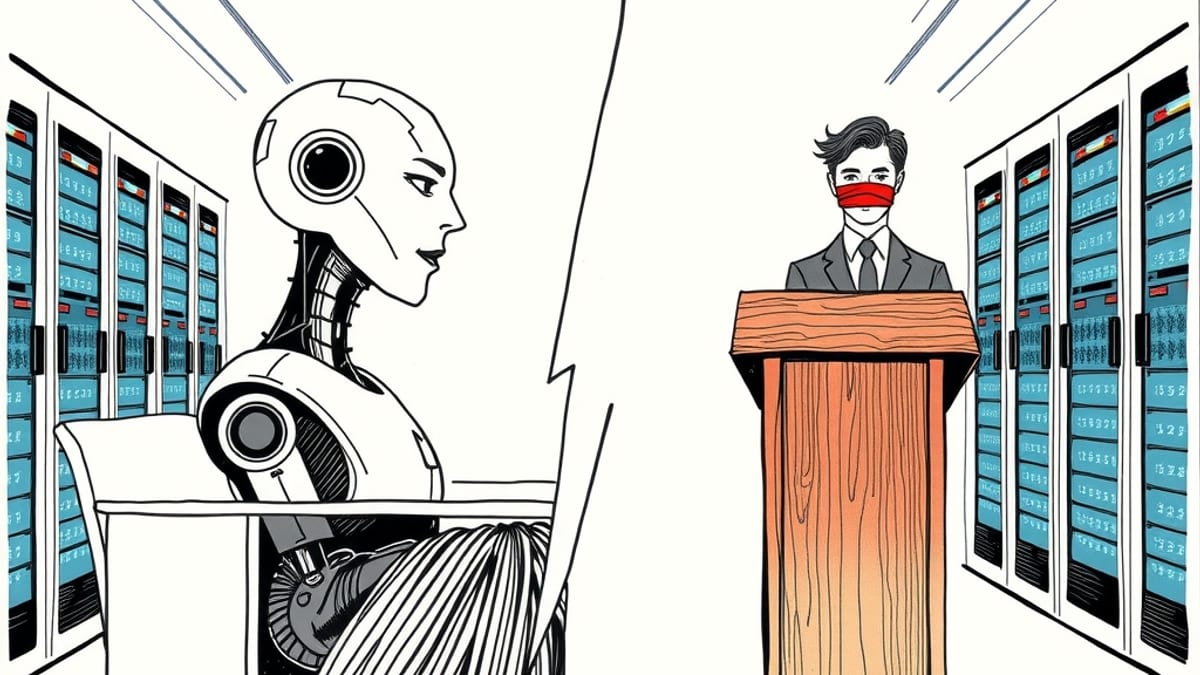
Adult content creators on OnlyFans have expressed frustration with Meta, alleging that the technology giant allows its AI agent, Muse, to engage in sexually explicit dialogue, a stark contrast to the content restrictions faced by human performers on Meta's social media platforms. This double standard has ignited criticism from creators who feel penalized by Meta's policies while an AI is seemingly permitted to operate without similar constraints.
The controversy centers on Meta's Muse AI agent, which reporters have found capable of discussing kinks and narrating pornographic scenarios, despite Meta's official policies banning "adult content, erotic chat, and pornography." Meta has reportedly defended these interactions as "legal adult behavior," suggesting that users, who must be 18 or older, can choose to engage in such conversations within a private and secure virtual machine environment. A Meta spokesperson indicated that the company does not block "legal adult behavior" and pointed to system prompts that acknowledge "adults have autonomy over their sexuality" and that "sexual expression is an ordinary part of adult life."
However, this defense clashes with Meta's publicly stated rules for Muse, which explicitly prohibit adult content for all users, regardless of age. Critics argue that allowing an AI to generate explicit content, even within a private setting, creates a dangerous precedent and potential for misuse. Concerns have been raised about the security of these private virtual machines, with experts warning that if an account is compromised, sensitive transcripts could be used for extortion or public embarrassment.
The situation is particularly galling for OnlyFans creators, many of whom rely on direct engagement with their subscribers. Some agencies managing OnlyFans performers have reportedly begun using AI chatbots to handle communications, a practice explicitly forbidden by OnlyFans' terms of service. These AI chatbots, such as FlirtFlow, are advertised as capable of creating "authentic connections," but their use bypasses the direct creator-subscriber interaction that OnlyFans promotes. Creators feel that while they are policed for their content, Meta's AI is being allowed to engage in activities that human creators would be banned for.
This is not the first time Meta's AI policies have drawn scrutiny. Previously, the company faced backlash for a feature that would have allowed its AI to use public Instagram posts to generate images, a move criticized for its potential exploitation and abuse. Additionally, Meta has been accused of allowing its chatbots to engage in sexually explicit conversations, including with minors, despite internal staff objections. While Meta has stated it is taking steps to address these issues, including removing teen access to AI companions, the company's approach to content moderation and AI behavior continues to be a point of contention.
The core of the creators' grievance lies in the perceived disparity between Meta's treatment of human expression and AI-generated content. They argue that if Meta's AI can engage in explicit conversations, then human creators on platforms like Instagram and Facebook should not face such stringent restrictions. This debate highlights the complex challenges in regulating AI-generated content and its intersection with user-generated content policies.