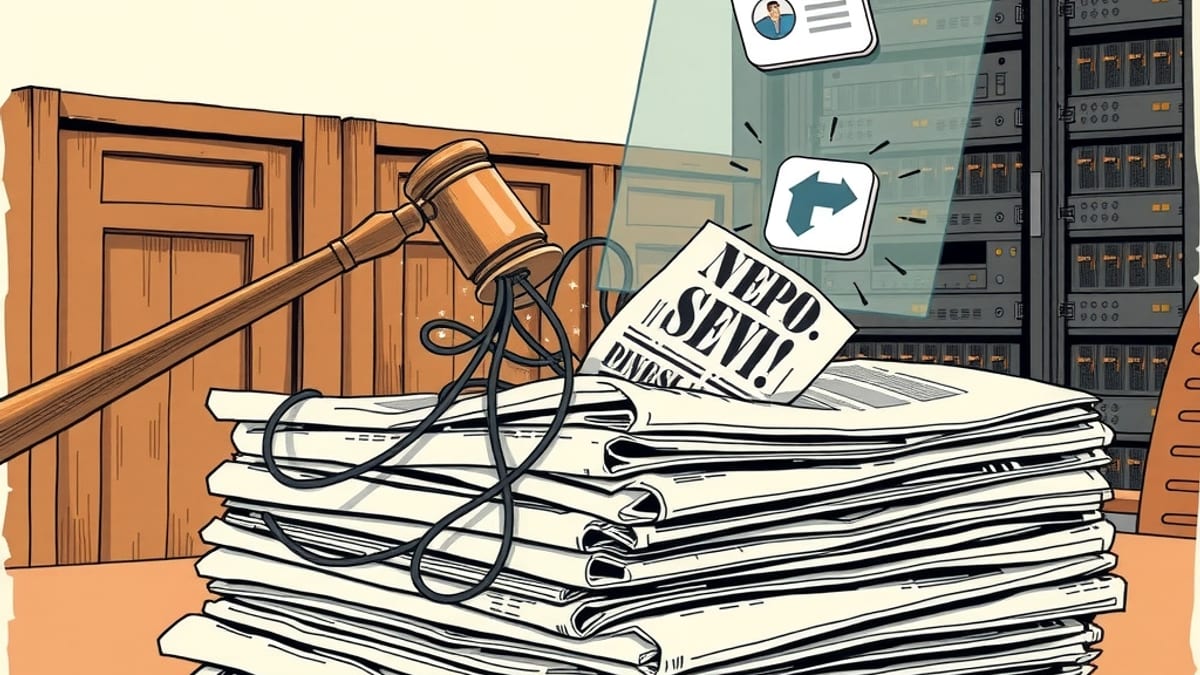
The New York Times Company initiated a lawsuit against Brave Software on November 2, 2026, in Manhattan federal court, accusing the company of copyright infringement and circumvention of technological measures. The lawsuit alleges Brave scraped copyrighted content to build its search index, which it then sold to AI companies for training models and generating responses. The Times describes Brave as a "supplier, distributor, and reseller" of this content.
Concurrently, the publishers of the New York Daily News, Chicago Tribune, and Orlando Sentinel filed a separate, but similar, lawsuit against Brave Software in the same court. Both complaints assert that Brave built an index of over 30 billion web pages using an unidentified crawler, preventing publishers from blocking its data collection.
A central claim in both lawsuits targets Brave's alleged monetization of scraped content through its Search API. This API reportedly provides companies such as Anthropic, Perplexity, Mistral, xAI, and Cohere with access to "real-time online content from the Brave Index" for AI training and response generation. The Times' complaint specifically alleges that Brave's "Ask Brave" AI chat feature reproduces and summarizes copyrighted articles, offering substitutes for original journalism rather than directing users to the publisher's website.
Beyond AI content use, the lawsuits challenge features within the Brave browser itself. The complaints state that Brave promotes a "Paywall blocker" feature, which allegedly allows users to access subscription-based content without logging in or paying. The lawsuits include comparisons showing that while other browsers display subscription restrictions, Brave presents the full article text. Furthermore, the publishers accuse Brave of blocking their advertisements by default within its browser while simultaneously selling its own advertising, thereby depriving publishers of revenue.
The New York Times had previously sent Brave warning letters on August 11, 2025, and April 13, 2026, regarding the alleged conduct. Graham James, a spokesperson for The New York Times, stated that Brave "flouted established copyright law and ignored repeated requests" to cease its infringing actions. The Times seeks a court injunction to stop the alleged conduct and financial damages. Brave Software has not yet issued a public response to the lawsuits.