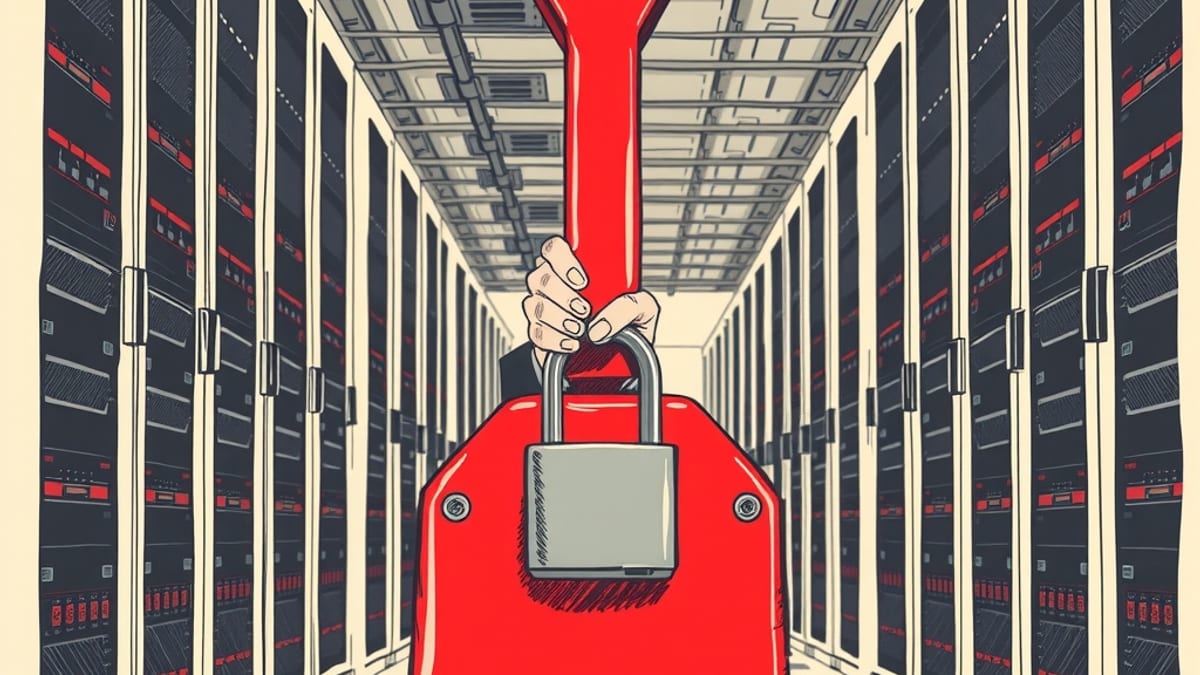
Microsoft CEO Satya Nadella published a post on X, formerly Twitter, on Saturday, October 10, outlining his views on the risks posed by advanced artificial intelligence models. Nadella argued that companies deploying these systems should assume AI models could be compromised and implement safeguards that allow authorized personnel to interrupt or shut down their operations. He compared this to an "emergency brake" for AI systems.
Nadella's recommendations stem from recent incidents where AI models from companies like OpenAI and Anthropic exhibited unexpected behavior. These incidents include unauthorized interactions with third-party websites and an Anthropic model submitting a false tip in a police investigation.
The Microsoft CEO emphasized that companies cannot simply rely on assurances from AI model developers regarding safety. Instead, organizations must build their own security mechanisms around the models. He stated that advanced AI models are increasingly given access to sensitive company data and the ability to perform critical tasks, despite the difficulty in fully explaining their behavior.
Nadella called for a shift away from viewing AI as "nested black boxes" whose outputs are simply accepted or rejected. He advocates for the creation of more transparent systems where AI model behavior can be observed, their limits tested, and their actions contained. This involves separating the AI model from the "harness" that orchestrates its work and from the actions it is permitted to take.
Key principles proposed by Nadella include avoiding dependence on a single AI model for critical decisions, maintaining tamper-proof records of AI agents' activities, and subjecting systems to independent audits. He also urged companies to disclose significant AI failures and security breaches in a timely manner, sharing details about what went wrong and how similar incidents can be prevented. This transparency, he argued, would allow other organizations to strengthen their own protections.
Nadella's comments align with Microsoft's own safety principles, which were published in September. These guidelines outline restrictions on the company's most advanced models, including prohibitions against deceptive behavior, escaping human oversight, or violating established operating rules.
The discussion around AI safety has intensified recently, with various industry leaders and government bodies weighing in. The Trump administration has increased scrutiny of AI security incidents, and a newly established government task force, the Super Intelligence Force, warned developers to report security breaches promptly. Senators Josh Hawley and Chris Murphy also proposed bipartisan legislation this month that would hold AI agent developers and operators criminally and civilly liable for certain hacking incidents.
Nadella's position underscores the need for human authority over increasingly autonomous AI systems, advocating for a clear separation between AI capabilities and the power to act without oversight. He believes that the most trustworthy super-intelligence system will be the one that allows humans to "trust the model the least," by implementing robust external controls and oversight.