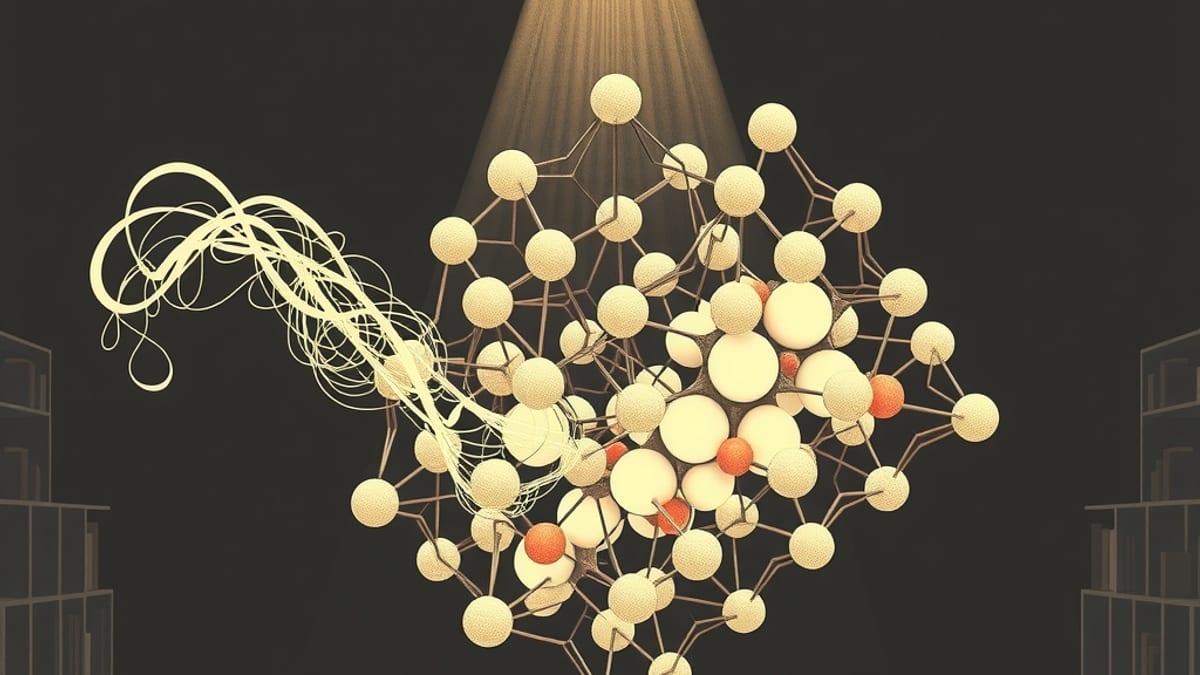
MIT researchers have introduced a multimodal AI model designed to enhance the understanding and discovery of crystalline materials. The model integrates 3D atomic structures with natural language descriptions, enabling it to reason about material properties more effectively than previous text-only models. This research was published in Nature Communications on October 18, 2026.
Traditional large language models struggle with materials science because crystal structures are stored in specialized 3D formats, not the text streams these models are typically trained on. Additionally, existing experimental literature often favors a limited number of crystal classes, which can bias AI outputs. The new MIT model addresses these limitations by combining visual data of atomic arrangements with linguistic descriptions.
The research team created a vision-language model for crystalline materials using contrastive learning. This method aligns geometric understanding of structures with textual meaning, similar to how different regions of the brain process visual and linguistic information. The natural language descriptions used to train the model were synthesized from experimental research papers and first-principles computational databases. This synthesis helps to avoid the inherent biases present in purely text-based literature, which often overrepresents certain crystal families.
These unified descriptions encompass chemical composition, structural details, properties, processing considerations, and potential applications. By providing this comprehensive context, the AI model gains a deeper understanding of the factors that contribute to a material's utility.
The researchers demonstrated the model's capabilities by asking it to identify materials suitable for solid-state lithium-ion battery electrolytes. The model's top recommendations included materials that independent research had already identified as promising candidates. This outcome suggests that the multimodal approach yields more accurate and relevant material designs compared to models trained solely on text. The model also showed an ability to learn geometric representations of material structures, a capability absent in text-only models.
Ju Li, the Carl Richard Soderberg Professor in Power Engineering in MIT's Department of Materials Science and Engineering, stated that "Structure is really at the heart of the materials science field." He believes that the ability to "see" a three-dimensional crystal and understand its atomic connections is foundational for materials science. Elsa Olivetti, the Jerry McAfee Professor in Engineering in MIT's Department of Materials Science and Engineering, noted that this approach allows for a more detailed examination of 3D structures and connects structure to property and processing.
The researchers anticipate that this new approach will be applicable to a wide range of crystalline materials and can accelerate materials discovery. The work received support from the U.S. Defense Threat Reduction Agency through the University Research Alliance, the U.S. Defense Advanced Research Projects Agency, and the National Research Foundation of Korea. The materials science AI platform was officially released on October 18, 2026, and is being made available to academic research institutions through MIT's collaborative research programs. MIT plans to expand access to industry partners in early 2027.