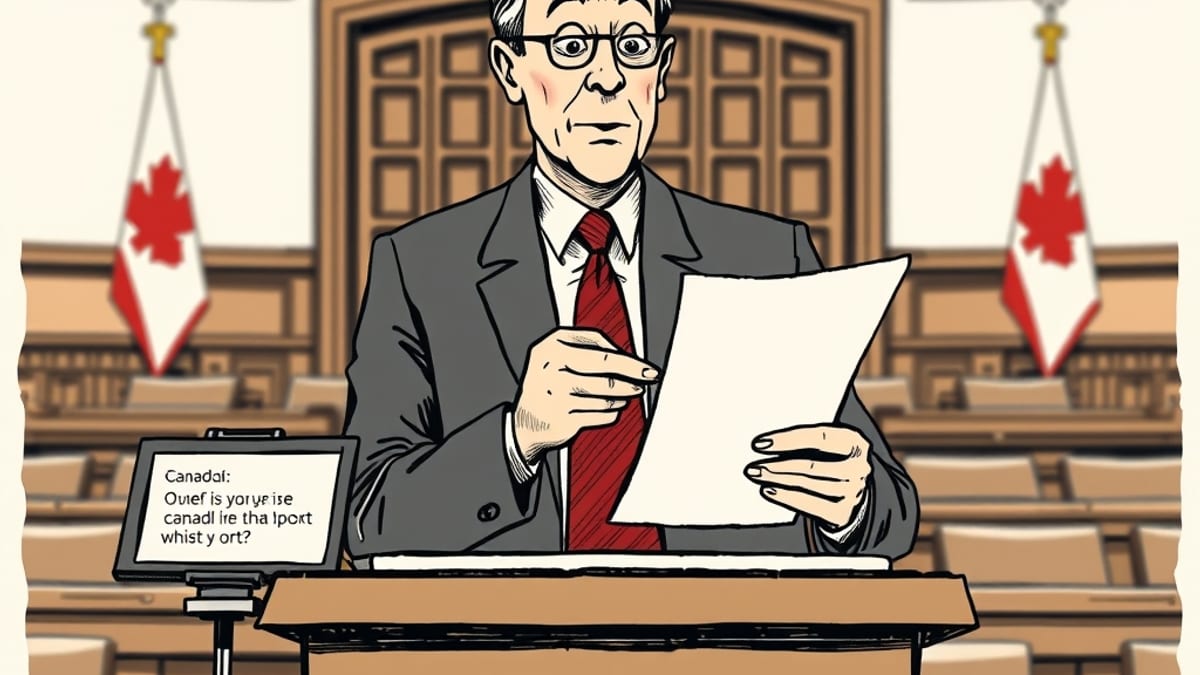
Bill Oliver, a Progressive Conservative member of the Legislative Assembly of New Brunswick, committed an unusual error during a recent floor speech. While addressing matters concerning the Office of the New Brunswick Advocate, Oliver read aloud a phrase that appeared to be an instruction from a large language model. The phrase in question was, "Here's a more natural, flowing version of that section that reads like a legislative speech rather than a series of short points." This sentence was not intended for public delivery but served as an internal note from an AI, indicating it had rephrased previous content for better flow.
The incident occurred when Oliver was speaking about public confidence in the office of an advocate. Instead of continuing with his prepared remarks, he transitioned into reading the AI's meta-commentary. This slip-up was captured on video and subsequently circulated online, drawing attention to the unedited use of AI-generated text in official proceedings. The error underscores a broader trend of AI tools becoming more accessible and integrated into various professional workflows, including those of public officials.
While the Canadian Parliament has been exploring the use of AI for specific tasks, aiming to improve efficiency and data analysis, this event points to potential pitfalls. The Parliament of Canada has been actively considering AI's role, with initiatives like the "AI for All" strategy and consultations on AI transparency. These efforts aim to ensure AI is used responsibly and ethically, but Oliver's speech indicates that the human review process for AI-generated content may require greater diligence.
The core of the mistake lies not in the AI's function, but in the failure to properly edit its output. Large language models often include such instructional or prefatory remarks as part of their response. The responsibility typically falls on the user to remove these elements before presenting the content. In this instance, the AI likely rephrased bullet points or short statements into more prose-like language, and the note was a direct instruction to the user about the modification made.
Commenters online drew parallels to professional standards, with some suggesting the incident reflected poorly on the legislator. The situation also brings to the fore discussions about AI regulation and its place in government. Canada has been actively debating AI policy, with proposed legislation like Bill C-27 aiming to address AI regulation, though it was abandoned before national elections. The government has since launched public consultations on AI transparency, seeking input on how to ensure Canadians are informed when interacting with AI systems.
The incident serves as a cautionary tale for any user of AI tools, not just politicians. Whether drafting speeches, reports, or other written materials, a thorough review of AI-generated text is essential. This includes checking for any embedded instructions, placeholders, or meta-commentary that the AI might include. The failure to perform this final check can lead to unintended public disclosures, as demonstrated by Bill Oliver's speech. The broader implication is that as AI becomes more embedded in public life, maintaining a clear distinction between AI-generated content and human authorship will require careful attention to detail and robust editing practices.