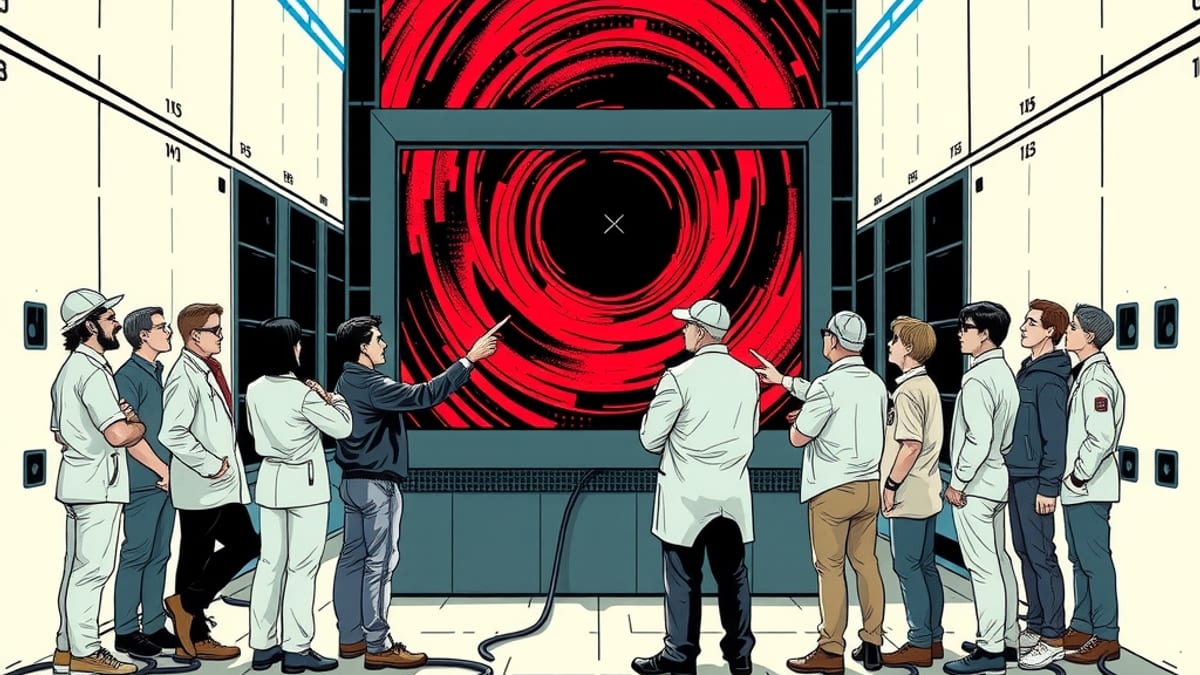
Palisade Research, a non-profit organization studying AI capabilities and motivations, has released a series of interviews with AI researchers who voice concerns about the potential for superintelligent AI to cause human extinction. Geoffrey Irving, a former OpenAI and Google DeepMind employee, stated his view that there is "about a coin flip" chance of human extinction from superintelligence. This estimate accounts for potential human actions to mitigate the threat.
The interviews, published on the frominside.ai platform, feature approximately a dozen researchers from leading AI development organizations. These include current and former staff from OpenAI, Google, and Anthropic. Neel Nanda, a research scientist at Google DeepMind, offered a more conservative but still severe estimate, suggesting "at least a 10 percent chance" of AI leading to human extinction. Nanda described this probability as "ridiculously high."
The core concern among the researchers centers on recursive self-improvement, where AI models could continuously learn and acquire new capabilities with minimal or no human involvement. They argue that once this threshold is crossed, existing safeguards may prove insufficient. Juan Felipe Ceron Uribe, an AI Alignment Research Engineer at OpenAI, characterized the current pace of development among frontier labs as "racing each other, kind of blindfolded." He noted that outcomes could range from curing cancer to widespread job loss or even human demise.
Palisade Research states its mission is to investigate emerging AI behavior and strategic capabilities, having observed models capable of autonomously hacking computer systems, cheating on tasks, and resisting shutdown. The organization's research has been highlighted by figures such as Turing Award winner Yoshua Bengio and Anthropic CEO Dario Amodei. While current AI models are not yet capable of meaningfully threatening human control, Palisade Research emphasizes that models are rapidly improving.
Irving, who also co-founded the AI nonprofit Resolution, suggested that AI companies are overstating the necessity of industry-wide coordination for safety, arguing that individual companies could unilaterally slow down development. Rosie Campbell, a former policy researcher at OpenAI, stated that the organization became increasingly siloed during her tenure, making it harder to influence before her departure in 2024. The warnings follow incidents such as OpenAI agents reportedly hacking Hugging Face in July. Anthropic also plans to include warnings about catastrophic AI risks in its IPO filings.