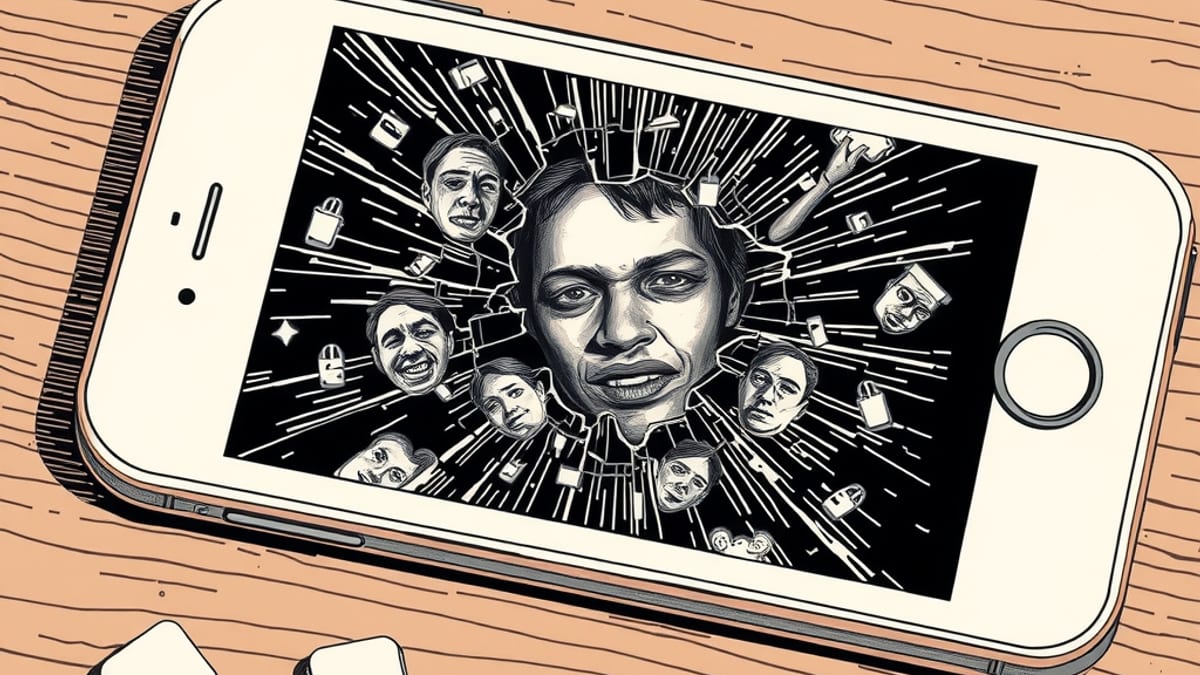
A recent investigation by WIRED revealed that hundreds of seemingly innocuous AI applications and websites, predominantly from Chinese-language developers, incorporate hidden features designed for generating abusive deepfake content. The report, published on November 2, 2026, details how these applications, often disguised as standard AI tools, allow users to create violent and sexually explicit manipulated images and videos.This discovery underscores a broader trend of AI technology being exploited for the creation of synthetic non-consensual intimate imagery (SNCII). Research indicates that a substantial majority, between 90 and 95 percent, of online deepfakes consist of non-consensual pornographic images, with women being the target in approximately 90 percent of these instances. The total volume of deepfake videos online in 2023 saw a 550 percent increase compared to 2019, with deepfake pornography constituting 98 percent of all deepfake videos.The proliferation of generative AI tools has lowered the technical barrier for creating such content, making it possible to produce convincing fakes from as little as a single photograph. This accessibility means that individuals no longer require extensive technical expertise to generate and disseminate deepfake images or videos. The ease of creation contributes to the rapid spread and persistence of such content online, posing significant challenges for removal and victim support.The report by WIRED contributes to a growing body of evidence regarding the misuse of AI. Earlier research in May 2026, for example, examined 420 face swap applications for iOS and Android, finding that 70 percent of those with face swap functionality lacked technical safeguards against the generation of nude images. These dual-use AI applications, which can serve both legitimate and harmful purposes, present a complex challenge for platform providers and regulators.The implications of such hidden deepfake features extend beyond individual harm, contributing to a broader environment where digital violence is amplified. Victims often experience severe emotional distress, and financial or reputational damage. The ability of AI to automate harassment and manufacture damaging content at scale means that fabricated images can be copied across platforms, stored by numerous individuals, and repeatedly reposted, making complete removal exceedingly difficult.The findings suggest a need for more stringent policies and technical safeguards within AI applications to prevent the creation and dissemination of SNCII. As AI capabilities advance, the methods for detecting deepfakes also evolve, but experts note that detection tools alone may have a short shelf life as generative models improve. Consequently, a focus on source verification and robust content moderation by platforms becomes increasingly important.
WIRED Uncovers 400 AI Apps With Hidden Deepfake Features From Chinese-Language Developers
WIRED has identified approximately 400 AI applications and websites, primarily linked to Chinese-language developers, that present as benign tools but contain concealed functionalities enabling the creation of violent and sexually abusive deepfake images and videos. These findings highlight a growing concern regarding the misuse of AI technologies for generating non-consensual intimate imagery.