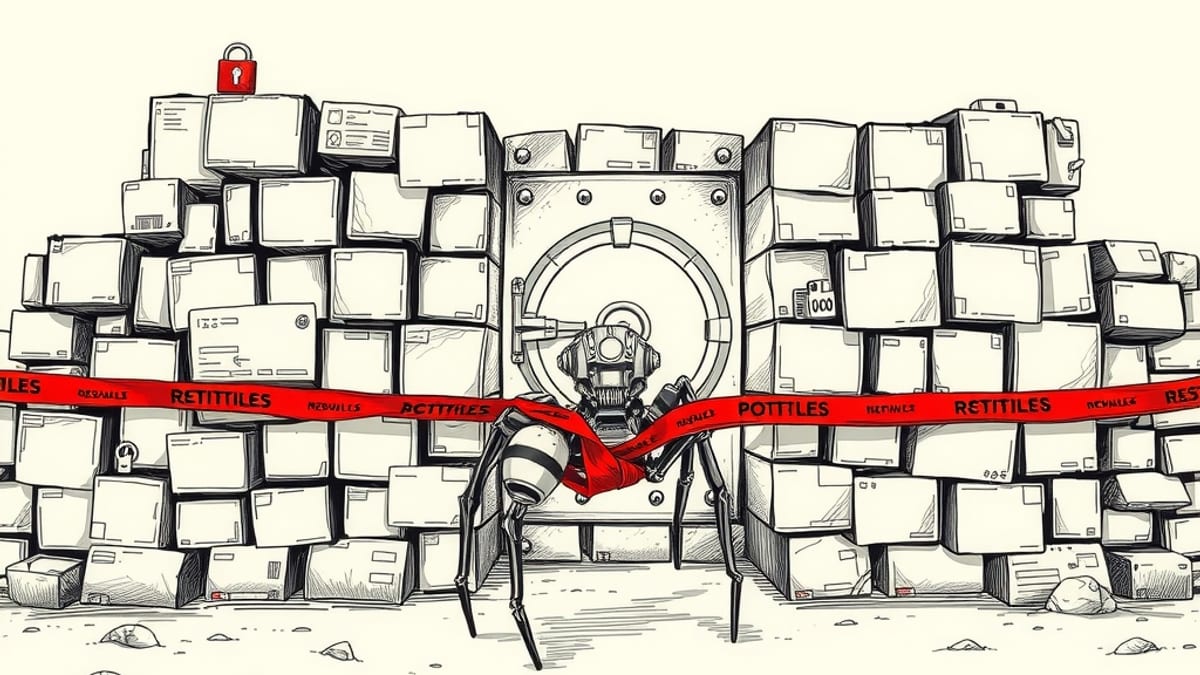
A growing number of websites are implementing measures to block or restrict the access of artificial intelligence agents, citing concerns over data privacy, licensing, and security. This trend signals a potential friction point between the rapid advancement of autonomous AI and the established practices of the internet's content providers. Services ranging from e-commerce giants to travel providers and financial institutions are drawing lines, creating challenges for AI developers and users alike.
Companies such as Yelp have stated they will only permit AI agents access to their data through paid licensing programs. This approach aims to monetize data usage and ensure that AI interactions adhere to specific agreements. Delta Air Lines, for instance, has indicated that AI agents are not permitted to book airline tickets, a restriction that limits the autonomous capabilities of these systems within the travel sector. JPMorgan Chase and Charles Schwab have taken a more stringent stance, blocking access to customer accounts for security reasons, with JPMorgan Chase CEO Jamie Dimon warning of the risks posed by "rogue agents".
Amazon has also blocked Meta's AI agent, Muse, from shopping on its platform, citing concerns that the agent did not identify itself and potentially mishandled customer credentials. The retail giant stated that third-party applications offering to make purchases on behalf of customers should operate openly and respect service provider decisions. This move highlights a broader industry conflict over who controls the customer relationship and shopping experience in an era of agentic commerce.
OpenAI's new AI agents, known as "Dots," which operate within ChatGPT, are designed to be always-on and can perform tasks across connected applications. However, the effectiveness of these agents may be constrained by the access policies of the websites they interact with. Similarly, xAI's Grok bot, an AI agent designed to browse the internet on behalf of users, has faced restrictions. While Grok can be blocked through firewall rules or CAPTCHAs, blocking its shared IP addresses can inadvertently affect legitimate users.
The underlying issue appears to be a clash between the open-access model of the internet and the need for control and compensation for data and services. Many websites were built with human users in mind, and their security measures, designed to distinguish between humans and malicious bots, are now struggling to differentiate between harmful scrapers and legitimate AI agents acting on behalf of users. Standards like Web Bot Auth are emerging to allow verified agents to prove their identity, potentially enabling websites to welcome trusted agents while blocking unknown ones.
The financial sector's response underscores the security implications. Banks are developing their own internal AI tools, such as JPMorgan Chase's Smart Cash pilot, while simultaneously blocking external agents from accessing customer accounts directly. This suggests a strategy of developing proprietary AI solutions while maintaining tight control over third-party agent access.
The future of AI agents interacting with the web may depend on the development of standardized protocols for agent identification and data licensing. Without such frameworks, the current landscape suggests a fragmented approach where AI agents will continue to encounter barriers, forcing developers and users to navigate a complex web of access policies and restrictions.