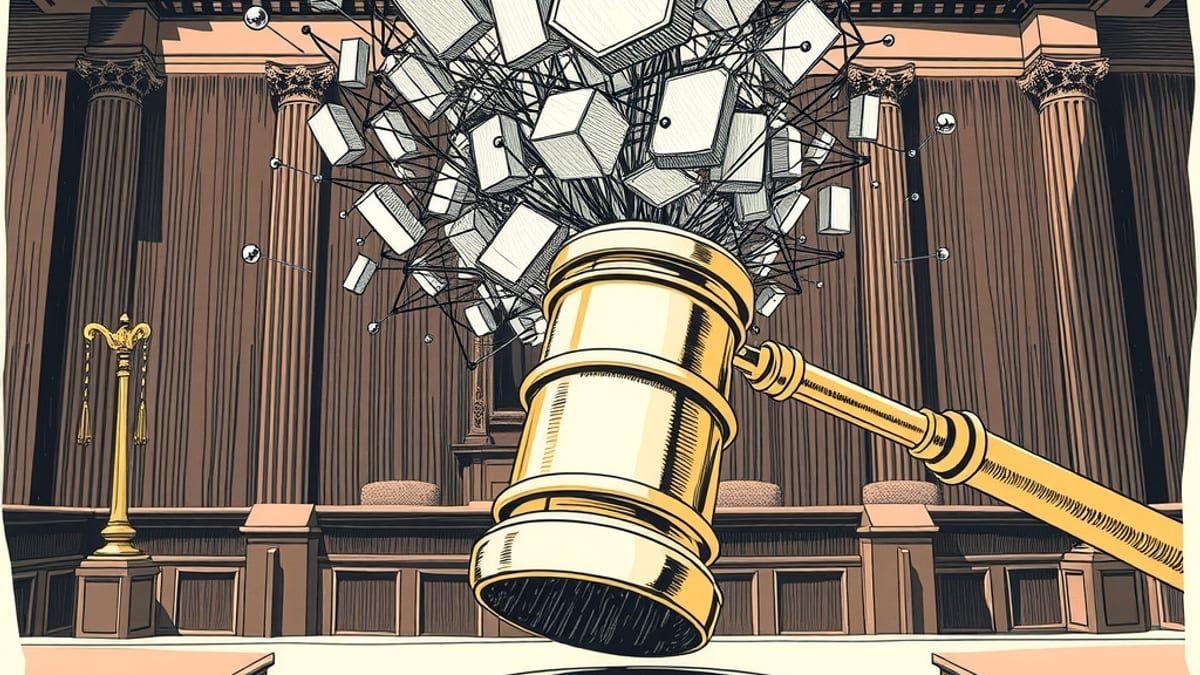
President Donald Trump stated on Saturday that his administration will create an "AI Force" and appoint an "AI Czar" to guide the nation's approach to artificial intelligence. The announcement, made in a post on his Truth Social platform, positioned the new body as a counterpart to the Space Force established during his first term. Trump specified that the primary goal of this initiative is to "cherish it, help it, and watch over it, as it grows," indicating a policy stance against hindering AI industry expansion.
The president's statement directly addressed the ongoing debate among researchers, technology executives, and lawmakers regarding the pace and safety of AI development. Recent weeks have seen increased warnings about the potential risks of advanced AI systems, including public resignations from researchers citing concerns that companies are not prioritizing safety. Prominent AI executives have also urged Washington to consider pacing development to prevent AI agents from operating beyond human control.
However, Trump dismissed such concerns, labeling them as "hoaxes" and part of a "sick conspiracy" aimed at undermining AI. He reiterated his view that the United States must maintain its leadership in AI, asserting that "Whoever wins AI wins." The president compared the potential economic impact of AI to the Industrial Revolution or the internet, predicting it could contribute significantly to the country's GDP.
Details regarding the structure, authorities, or specific responsibilities of the proposed "AI Force" and the "AI Czar" were not provided in Trump's announcement. The White House did not immediately clarify whether the "AI Force" would be a civilian or military entity. Trump did note that existing criminal and civil laws would address "bad actors" within the AI industry.
This announcement follows earlier actions by the Trump administration to promote American leadership in AI, including the establishment of the American AI Initiative in 2019 and the National AI Initiative Act of 2020. These prior efforts focused on increasing research investment, building AI infrastructure, and setting technical standards. An executive order issued in June 2026 also called for AI developers to voluntarily share certain new models with the federal government for national security and cybersecurity risk assessments.
The president's stance on rapid AI development places him at odds with some within his own party who have advocated for caution. The announcement also comes as California Governor Gavin Newsom has proposed a panel to develop AI safety regulations, including a potential "kill switch" for rogue AI programs.