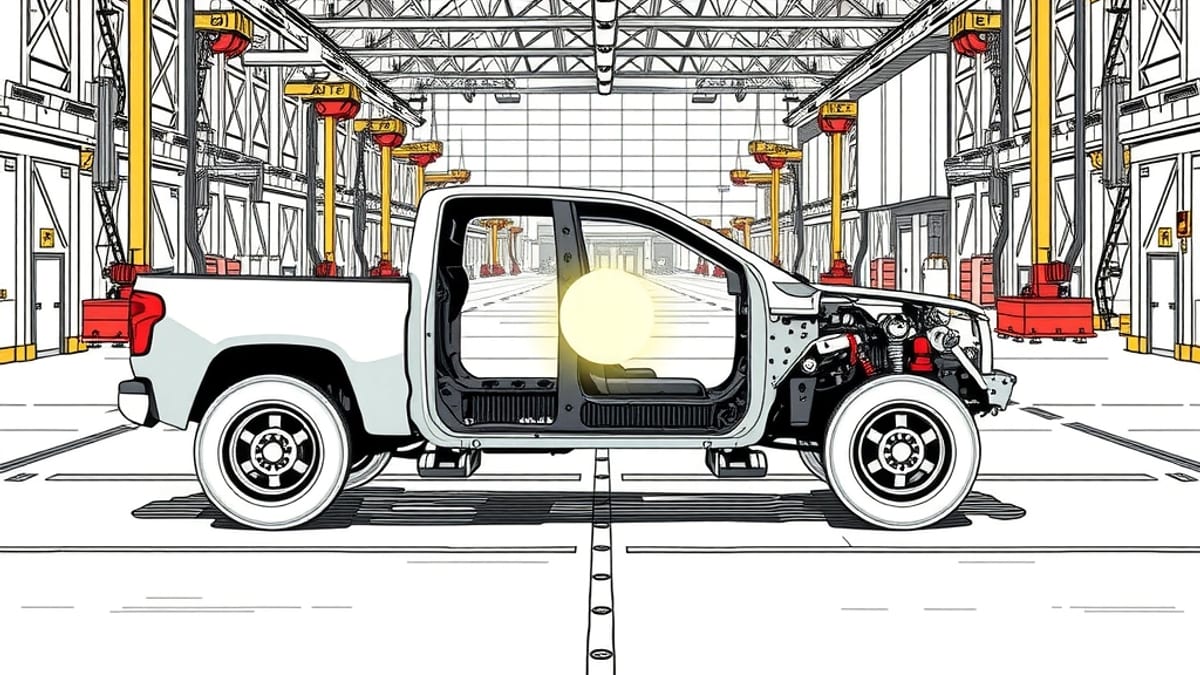
Tesla announced it will wind down production of its Cybertruck pickup truck at its Gigafactory in Texas around the middle of 2027. Chief Executive Elon Musk stated the decision is to make space for increased output of the Cybercab, Tesla's self-driving taxi. This move marks a significant strategic pivot for the electric vehicle maker, prioritizing its artificial intelligence and robotics ventures over the Cybertruck, a vehicle that has faced production challenges and lower-than-anticipated sales.
The Cybertruck, unveiled in 2019 and with first customer deliveries in late 2023, struggled to meet production targets and sales expectations. Tesla had projected annual sales of up to 250,000 units, but actual sales figures have fallen considerably short. The company's Texas factory is the sole location for Cybertruck manufacturing, and it is unclear if production will resume at another facility. Cybertruck lead engineer Wes Morrill suggested the vehicle's development platform will now live on through the Cybercab.
The focus now shifts to the Cybercab, a two-passenger autonomous vehicle that began production at the Texas plant in February 2026. Tesla has already begun offering paid rides in the Cybercab in parts of Austin, Texas, since September 2026. The company aims for the Cybercab to be a core component of its robotaxi fleet, central to its autonomous ride-hailing strategy. However, the Cybercab's rollout has faced regulatory scrutiny, with the National Highway Traffic Safety Administration opening an audit into its self-certification for federal safety standards in September 2026.
This production shift aligns with Musk's broader vision for Tesla, emphasizing robotics, artificial intelligence, and autonomous driving over traditional vehicle development. The company also recently ceased production of its Model S and Model X vehicles, repurposing that factory space for the production of its Optimus humanoid robot. Tesla's financial performance has also been under pressure, with its stock experiencing a decline following recent political election results and broader market trends affecting AI stocks.