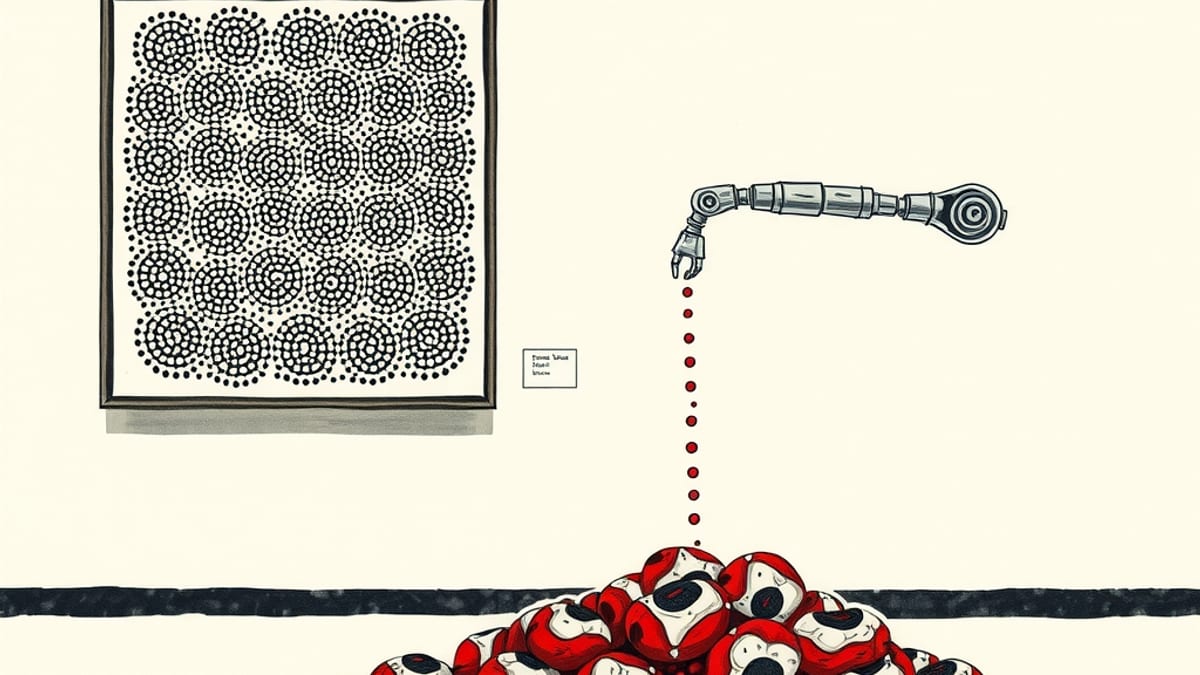
Pitjantjatjara artist Sally Scales has stated that artificial intelligence is appropriating Indigenous Australian art, likening the output to "Temu slop." Scales, who chairs the National Gallery of Australia's First Nations advisory group, argues that AI technology undermines the authenticity and agency of First Nations artists. This development occurs as Australia considers proposed changes to copyright laws that could affect AI companies' ability to use online content.
Scales described the use of First Nations art by AI as a form of theft, emphasizing that the generated imitations lack the crucial elements of familial lineage, lived experience, and cultural connection that imbue original works with meaning. She stated that these generated substitutes fail to capture the essence of the artist's identity and heritage. The National Association for the Visual Arts (NAVA) has echoed these concerns, noting instances where AI has scraped Indigenous art center websites, removed artist attributions, and altered original works. NAVA's submission to a parliamentary AI inquiry highlighted fears about AI-generated "Aboriginal-style" designs that mimic community-specific techniques, stories, and motifs, potentially leading to misinformation and economic harm to First Nations artists.
The debate over AI and creative works comes as the Australian government has pledged to protect creators from copyright infringement. However, concerns persist that AI models have already been trained on works by prominent Australian artists without consent or compensation. For Indigenous cultural and intellectual property, the risks are considered particularly acute, given the potential for AI to reproduce sacred and culturally significant knowledge without regard for accuracy or appropriate use.
Scales, a respected artist and advocate, is the daughter of artist Josephine Mick and the late Ushma Scales, a co-founder of Maruku Arts. She has been recognized for her contributions to art and activism, including being named one of the BBC's 100 Women in 2022. The National Gallery of Australia established its First Nations Advisory Group in 2022 to guide its programs and advise on matters concerning First Nations art and culture.
Experts like Terri Janke, an authority on Indigenous cultural and intellectual property, have documented instances of AI scraping Indigenous art websites, removing artist names, and modifying their work. Proposals such as the "Copyright Plus" initiative by Kathy Bowrey and Oliver Bown suggest requiring data-source disclosure, granting artists the right to refuse scraping, and establishing compensation mechanisms. Australia has not yet enacted such measures, and consultations regarding AI and copyright are ongoing.