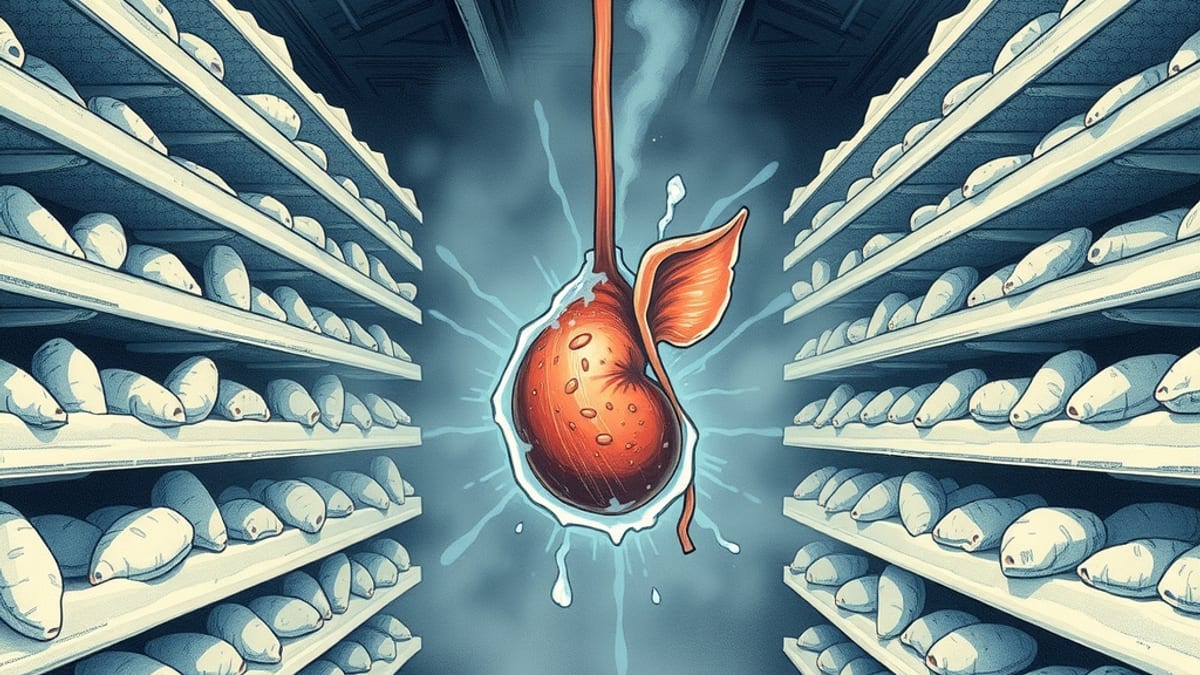
Researchers have successfully reanimated pig kidneys after they were cryopreserved at -150°C for a year, according to a report from MIT Technology Review. This marks the first instance of a whole organ of this size being successfully rewarmed and demonstrating renewed function after such long-term freezing. The kidneys, which are comparable in size to human kidneys, were maintained in a glass-like, non-crystalline state during storage.
The ability to cryopreserve organs at ultra-low temperatures, typically between -120°C and -160°C, is a longstanding goal in organ transplantation. Current methods like static cold storage can preserve organs for only a few hours, generally around 4 hours for a heart and 12 hours for a liver, before metabolic activity leads to damage. Machine perfusion techniques can extend this viability, but effective long-term storage beyond 3-12 hours remains elusive in clinical practice.
A key challenge in cryopreservation is preventing mechanical damage from ice crystal formation as tissues freeze. This damage can render organs unusable. Researchers at the University of New Hampshire developed a predictive model to identify freezing protocols that cause fractures, aiming to improve cryopreservation strategies. Similarly, a team at Texas A&M University found that carefully adjusting the temperature at which tissues vitrify into a glass-like state can reduce cracking.
The recent success with pig kidneys builds on earlier advancements in the field. In 2023, researchers successfully transplanted a cryopreserved rat kidney, demonstrating the potential for frozen organs in transplantation. Other research has explored using antifreeze proteins to prevent freezing damage and extend donor organ storage.
The reanimation of these pig kidneys involved a process that maintains the organ's structural integrity during freezing and thawing. While specific details of the rewarming technique for these year-frozen kidneys were not immediately available in the public domain, previous research on reanimating perfused swine kidneys has involved specialized apparatus to control aortic flows, pressures, and temperatures, assessing viability through urinary flow and composition.
The implications of this breakthrough for human organ preservation are substantial. Long-term organ banking could address the critical shortage of donor organs, where approximately 17 patients die daily in the U.S. while awaiting a transplant. The ability to store organs for extended periods would allow for better logistical planning, tissue matching, and potentially the global sharing of organs.
Future research will focus on replicating these findings with human organs. Advancements in cryopreservation technologies, including nanowarming techniques that use nanoparticles to rewarm organs evenly and container technologies to prevent fracture during transport, are actively being developed. These efforts aim to overcome the remaining hurdles in achieving widespread clinical application of long-term organ preservation.