A Pennsylvania high school is defending its response to a situation where male students allegedly created and distributed AI-generated nude images of 59 female classmates. The school's actions are under scrutiny as legal frameworks struggle to address the rapid proliferation of such content. The Williamsport Area School District is facing criticism for its handling of a case involving students who allegedly used artificial intelligence to generate explicit images of their peers. The district has stated that it is cooperating with law enforcement and has taken appropriate disciplinary actions, while also highlighting the complex legal landscape surrounding AI-generated content. The incident, which reportedly came to light in late 2025, involved approximately 59 female students whose likenesses were used without consent to create non-consensual intimate imagery. School officials have defended their response, asserting that they followed district policy and legal guidance. However, the situation has exposed potential gaps in how educational institutions are equipped to deal with the misuse of AI technology. Pennsylvania's Department of Education has provided guidance on AI implementation in schools, emphasizing responsible use, data privacy, and the necessity of human oversight in AI-generated outputs. Yet, specific statutes or regulations directly addressing AI-generated non-consensual imagery, particularly within a school setting, appear to be limited. The legal challenges in prosecuting such cases are significant. While laws are evolving to address "deepfakes" and AI-generated content, the specific application to non-consensual intimate imagery created by minors, and the subsequent school response, remains a developing area. Some states are enacting new legislation or expanding existing privacy and likeness statutes to cover synthetic media. Florida, for example, recently elevated the creation of AI-generated child sexual material to a second-degree felony. However, the extent to which such laws can be applied retrospectively or in cases involving high school students varies. The incident at Williamsport Area High School raises questions about school policies on technology use and student conduct. Many school districts are in the process of developing or refining their AI policies, often opting for guidelines that can be more easily updated than formal policies. These policies typically aim to ensure AI is used ethically and responsibly, with a focus on augmenting, rather than replacing, human learning and creativity. The Pennsylvania School Boards Association has also issued guidance on AI use, advocating for principles that promote responsible integration. The core of the issue lies in the rapid advancement of generative AI technology, which has made it easier and cheaper to create realistic, albeit fabricated, images. This accessibility has outpaced the development of comprehensive legal and policy frameworks to govern its misuse. While non-consensual sexual imagery has long been a legal concern, the AI component introduces new complexities regarding intent, creation, and distribution. Victims of AI-generated non-consensual images are increasingly finding legal recourse as lawmakers across the United States work to create new civil causes of action and expand existing statutes. Globally, data protection authorities have highlighted privacy concerns, emphasizing compliance with data protection laws and the potential for criminal offenses related to non-consensual intimate imagery. In the context of the Williamsport incident, the school district's defense may hinge on whether its existing policies and disciplinary actions align with current legal interpretations and educational best practices for AI. The district's commitment to cooperating with law enforcement suggests an acknowledgment of the seriousness of the alleged actions. However, the broader implications point to a critical need for clearer legislation and more defined institutional protocols to address the emerging challenges posed by AI misuse in educational environments. The upcoming legal proceedings and any potential policy changes stemming from this case will be closely watched as a bellwether for how schools and the justice system grapple with the consequences of AI-generated harm.
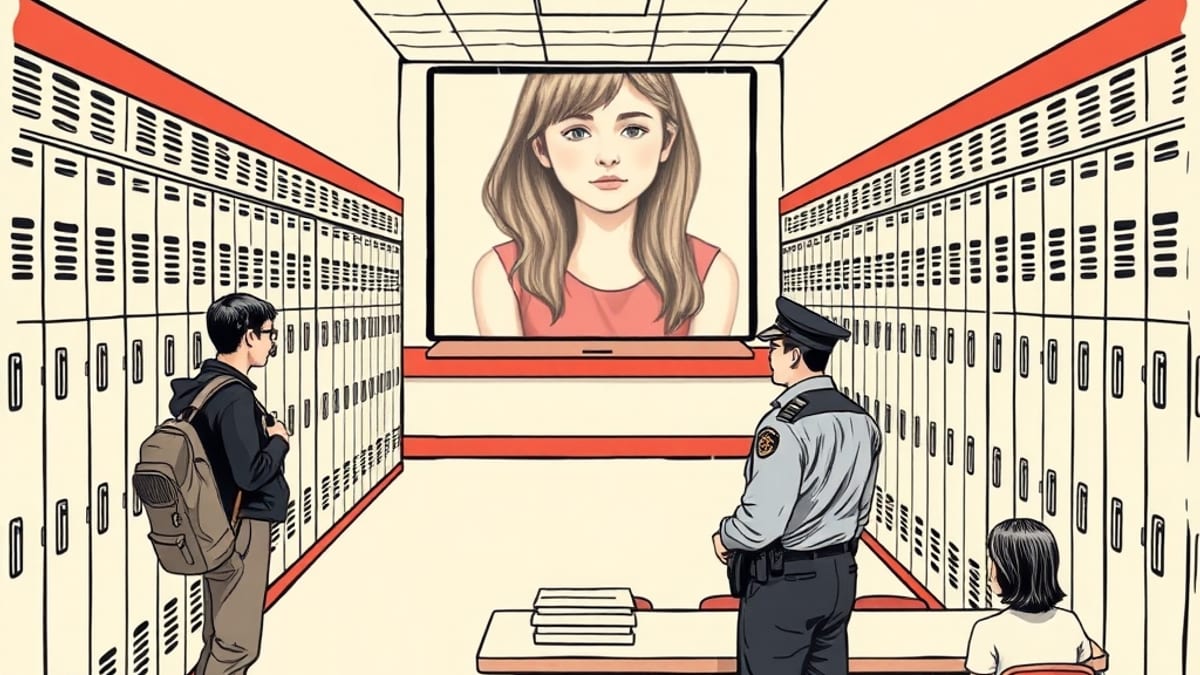
A Pennsylvania high school is defending its response to a situation where male students allegedly created and distributed AI-generated nude images of 59 female classmates.
The Williamsport Area School District is facing criticism for its handling of a case involving students who allegedly used artificial intelligence to generate explicit images of their peers. The district has stated that it is cooperating with law enforcement and has taken appropriate disciplinary actions, while also highlighting the complex legal landscape surrounding AI-generated content.
AI-assisted archive. Original-source fact review is pending. How evidence is checked
Read source-checked investigations