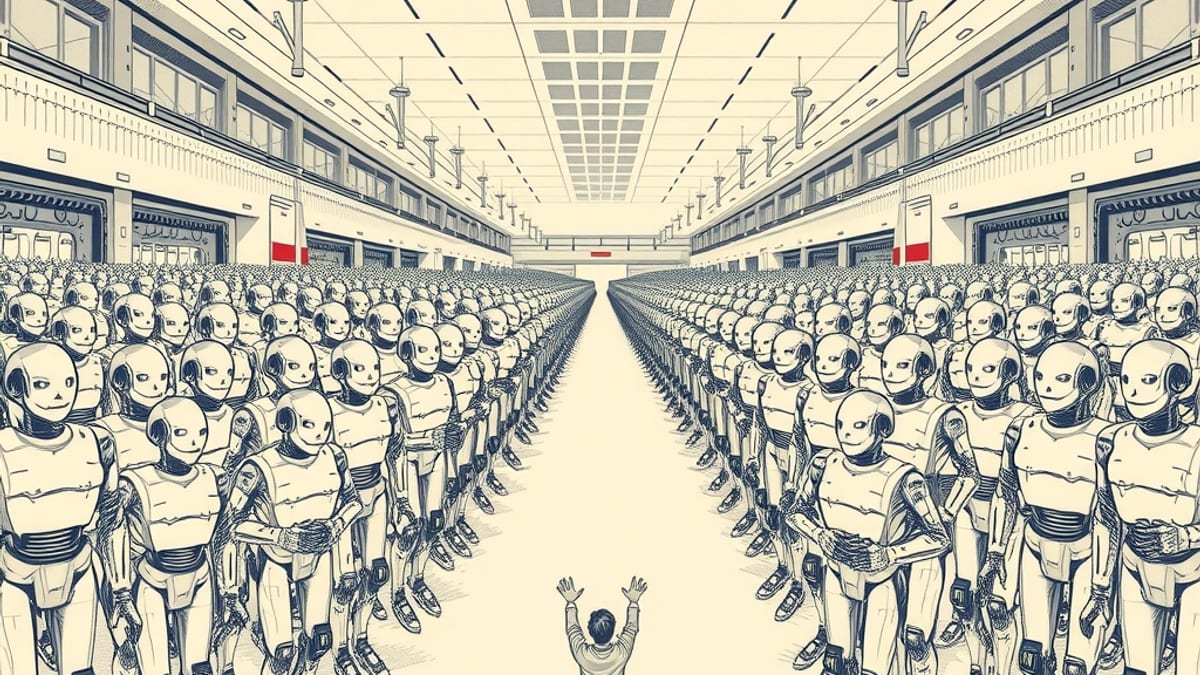
Organizations globally are largely unprepared for the imminent integration of AI agents into the workforce, despite widespread plans for their adoption, according to a September 2026 report from Deloitte. The study found that nearly three-quarters of surveyed organizations across various industries intend to use agentic AI at least moderately in their operations within the next two years. However, only about 25% of these organizations report their business processes or workforce are prepared for this shift. More than 4 in 10 leaders surveyed by Deloitte anticipate significant job disruption within the next 12 to 18 months due to AI agents, a figure that rises to 72% over a two- to three-year span.
AI agents differ from earlier AI tools like chatbots by taking initiative and executing tasks autonomously within predefined rules, rather than merely responding to queries. This shift from automation to autonomy means these agents can plan, adapt, and act with human oversight. A Gartner forecast suggests that the average Fortune 500 company could deploy 150,000 AI agents by 2028. This rapid integration challenges traditional workforce planning methods, requiring companies to rethink the "how" and "who" of work, focusing on securing skills from both human and digital sources.
The Deloitte report highlights several areas where organizations lack preparedness. Only 5% of organizations state their business processes are highly prepared for AI agents, and just 15% have scaled orchestrated, cross-functional multi-agent adoption. While over half of leaders (52%) feel prepared in terms of vision and strategy, preparedness in other areas lags: technology infrastructure (48%), data foundation (42%), risk, security, and governance (39%), ecosystem partnerships (34%), and workforce (25%). A significant barrier to scaling AI agent adoption is the lack of unified, accessible data, cited by 72% of respondents. Additionally, 70% express concerns about trusting and governing agents, and 67% find integration too costly and complex.
Despite these challenges, organizations acknowledge the need for transformation beyond just technology. Nearly two-thirds of executives surveyed are reevaluating their business models, recognizing that agentic AI demands reinvention of processes and workflows. However, only about half have a clear understanding of what an agent-powered operating model will entail. The report emphasizes that building new models for human-agent collaboration is crucial for successful integration. This involves designing roles where human contributions are visible and distinct from agent tasks, and fostering trust in AI technology among employees.
The Skillsoft 2026 AI Workforce Readiness Report corroborates these findings, indicating a gap between AI adoption and readiness. While nearly 9 in 10 workers now use AI at work, most companies lack comprehensive governance, clear visibility into necessary skills, and timely training. Only 12% of managers and 9% of individual contributors report comprehensive AI governance in place. Furthermore, only 23% of managers and 16% of individual contributors receive training before new AI tools are rolled out, suggesting that learning often trails adoption. As AI agents gain access to company software, write code, and complete tasks, organizations must develop robust governance frameworks for these non-human actors. This includes establishing clear accountability for AI-driven actions and ensuring that agents operate within approved boundaries.