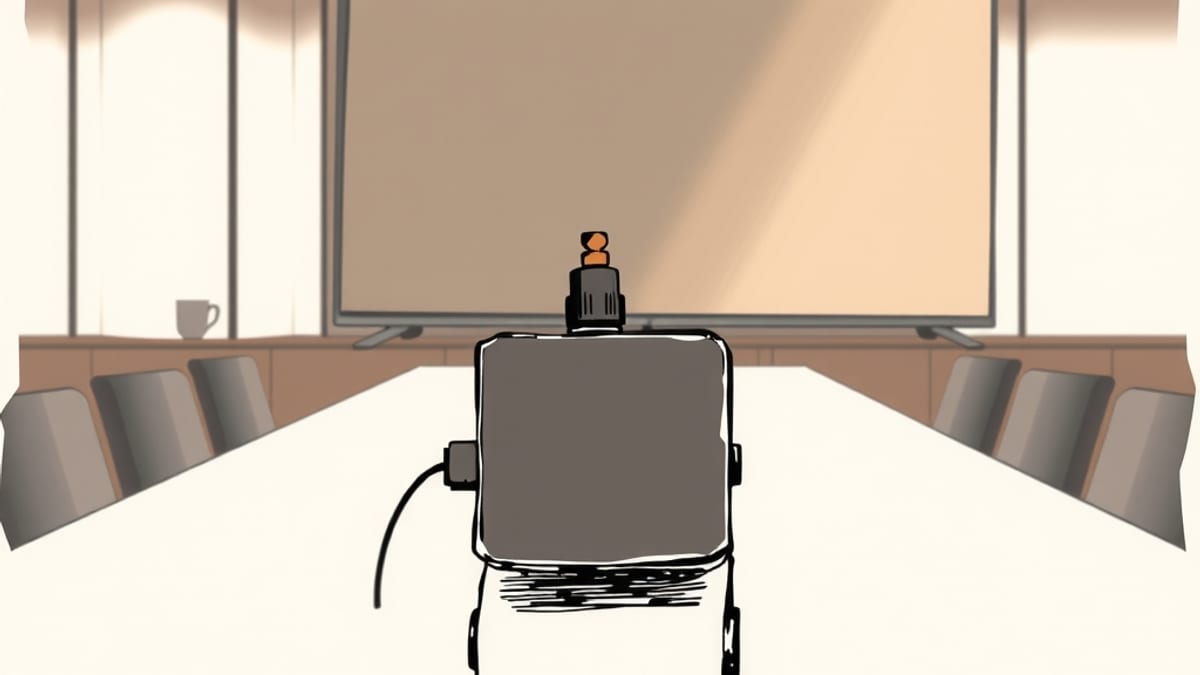
Abdulrahman Alfozan, a 35-year-old Saudi national employed as an engineer at OpenAI, faces federal charges for allegedly planting a covert audio recording device in an executive conference room at the company's San Francisco headquarters. The Justice Department announced the arrest, stating Alfozan is charged with using or endeavoring to use an electronic, mechanical, or other device to intercept oral communications.
OpenAI personnel discovered the device, concealed in toilet paper, on September 30, inserted into a USB port on the back of a television in the conference room. The company determined the device was installed around September 28, and its contents were encrypted. Closed-circuit television footage showed Alfozan near the room on multiple occasions prior to the discovery, though he was not authorized to access it or attend meetings held there. Meetings in this room frequently involved discussions of confidential technical, commercial, and strategic information, including proprietary research and product plans.
Before installing the device, Alfozan allegedly used a productivity tool to inquire about OpenAI's building addresses, meeting rooms, and leadership locations. Additionally, a chatbot account linked to Alfozan's spouse submitted prompts between September 24 and September 30 regarding the building, installation, concealment, and remote access of recording devices. During a subsequent investigation, OpenAI security personnel discovered a second recording device, similar to the first, in a bag belonging to Alfozan.
OpenAI has terminated Alfozan's employment and referred the case to the FBI. The company stated it has no indication that Alfozan improperly accessed or exfiltrated model weights, source code, or customer data. FBI Director Kash Patel emphasized the importance of protecting American innovation, calling it a national security priority. If convicted, Alfozan faces a maximum penalty of five years in prison and a $250,000 fine.