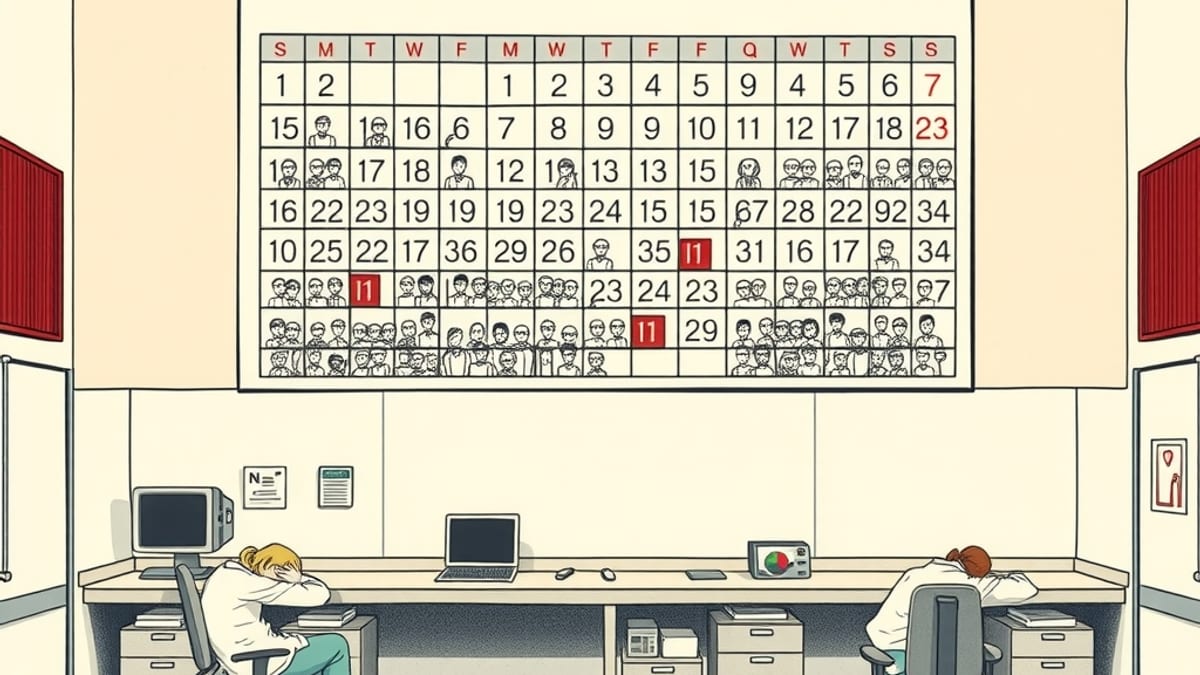
Nurses at HCA Healthcare facilities are raising alarms about Timpani, an artificial intelligence scheduling software developed with Palantir, citing errors that they claim compromise patient safety and contribute to staff burnout. Since 2023, HCA has implemented Timpani at approximately 130 of its 190 locations across the United States. Nurses report that the software frequently disregards their stated preferences for shift assignments, including requests for specific hours, nights, weekends, or days off. This lack of flexibility, they argue, leads to unpredictable and exhausting work schedules, such as consecutive shifts, that negatively impact their well-being.
Staff members contend that Timpani's scheduling decisions can result in care teams being understaffed or lacking experienced personnel, particularly on Sundays. Amber Retzloff, a critical care nurse in Florida and a union leader, stated that the software assigned her different shifts more than half the time for 50 requested 12-hour shifts, often scheduling her for back-to-back days. Retzloff believes the system is less effective at honoring preferences than manual scheduling by managers. These issues force nurses to spend more time attempting to trade shifts or appeal their schedules, diverting time and energy from direct patient care.
Critics also suggest that the AI's algorithmic approach may not adequately account for the nuanced needs of patient care or the practical experience of seasoned nurses. Some nurses have expressed concerns that the system's focus on efficiency may prioritize cost savings over bedside judgment, potentially leading to unsafe patient care environments. Palantir maintains that its hospital software plays a role in improving patient care by increasing operational efficiency. HCA Healthcare has stated that nurse leaders can edit Timpani's recommendations and that the platform accommodates a high percentage of requested days off. However, nurses involved in protests and interviews have voiced distrust in their employers' prioritization of patient safety when implementing AI.
The software is built on Palantir Foundry, a platform designed for data analysis and operational management. Timpani uses patient volume forecasts and staffing requirements to construct nursing schedules. Despite these technological advancements, nurses argue that the system's automated nature fails to capture essential human knowledge and the dynamic nature of healthcare needs. The ongoing concerns highlight a broader debate about the integration of AI in healthcare and the balance between algorithmic efficiency and human oversight in critical patient care settings.