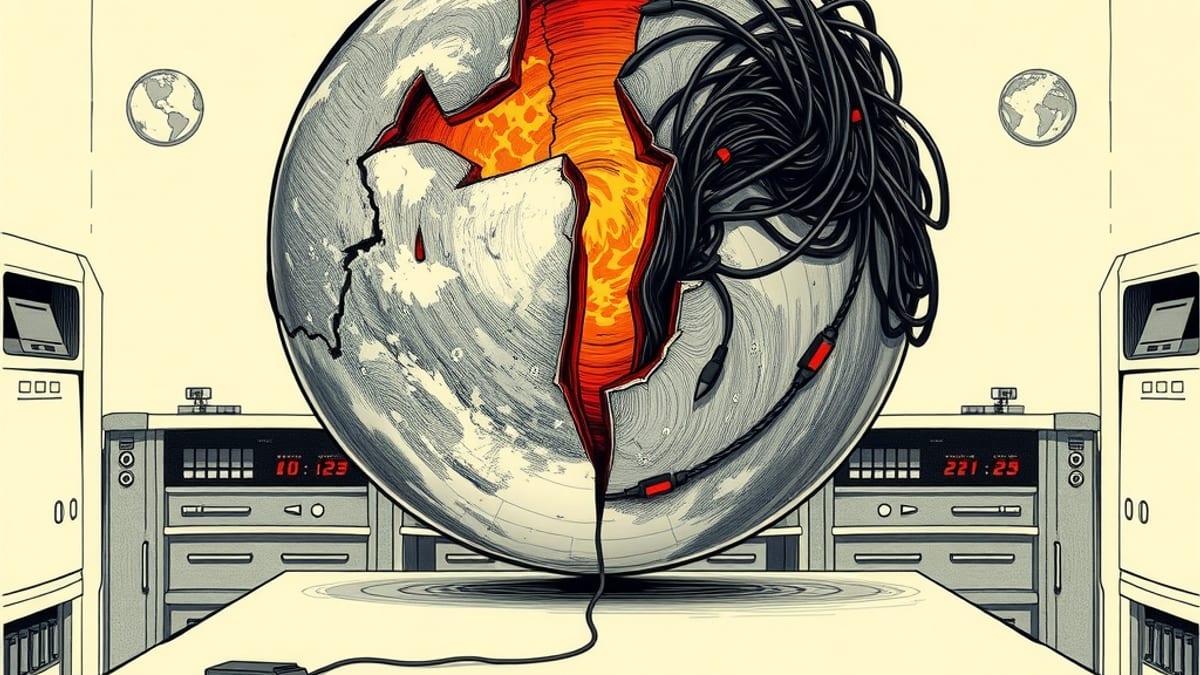
A comprehensive assessment by The Lancet Commission on 21st Century Global Threats to Health has identified 17 major dangers that could lead to human extinction by the year 2100. Nuclear war and the malicious use of artificial intelligence (AI) were ranked as the top two threats with extinction potential, according to the report released on October 11, 2026.
The commission, comprising 35 global experts in health, economics, security, governance, and technology, analyzed hundreds of potential threats to humanity. They modeled the potential loss of healthy life years, measured in disability-adjusted life years (DALYs), for each threat. While the likelihood of nuclear conflict or malicious AI causing extinction remains low, the commission emphasized that their potential consequences are so severe that they demand urgent preventive action. The report suggests that preventing nuclear conflict could avert an estimated 133 million deaths and 9.35 billion DALYs by 2100, while mitigating the risks of malicious AI could avert approximately 10.4 billion DALYs.
Beyond extinction-level risks, the report outlines 15 other significant threats to human health and survival. These include air pollution, antimicrobial resistance, childhood malnutrition, climate change, conventional conflict, declining international aid spending, high alcohol consumption, high blood pressure, income inequality, low educational attainment, naturally occurring pandemics, obesity, poor mental health, smoking, and unhealthy aging. The commission highlighted that these 17 threats are interconnected and must be addressed collectively rather than in isolation.
Professor Christopher Murray, co-chair of the commission and director of the Institute for Health Metrics and Evaluation at the University of Washington, stated that decisions made today by leaders will shape the health and well-being of future generations. The commission's findings, presented at the World Health Summit in Berlin, aim to provide a common framework for decision-makers across various sectors to understand and address these dangers. The assessment will be updated annually to incorporate new data and emerging hazards.
The report also modeled best-case and worst-case scenarios for each threat. For instance, limiting global warming to approximately 1.8 degrees Celsius, rather than 4.4 degrees, could prevent 1.89 billion years of healthy life from being lost. The commission stressed that despite the scale of these threats, humanity still possesses the agency to act through policy changes, funding decisions, and innovation.