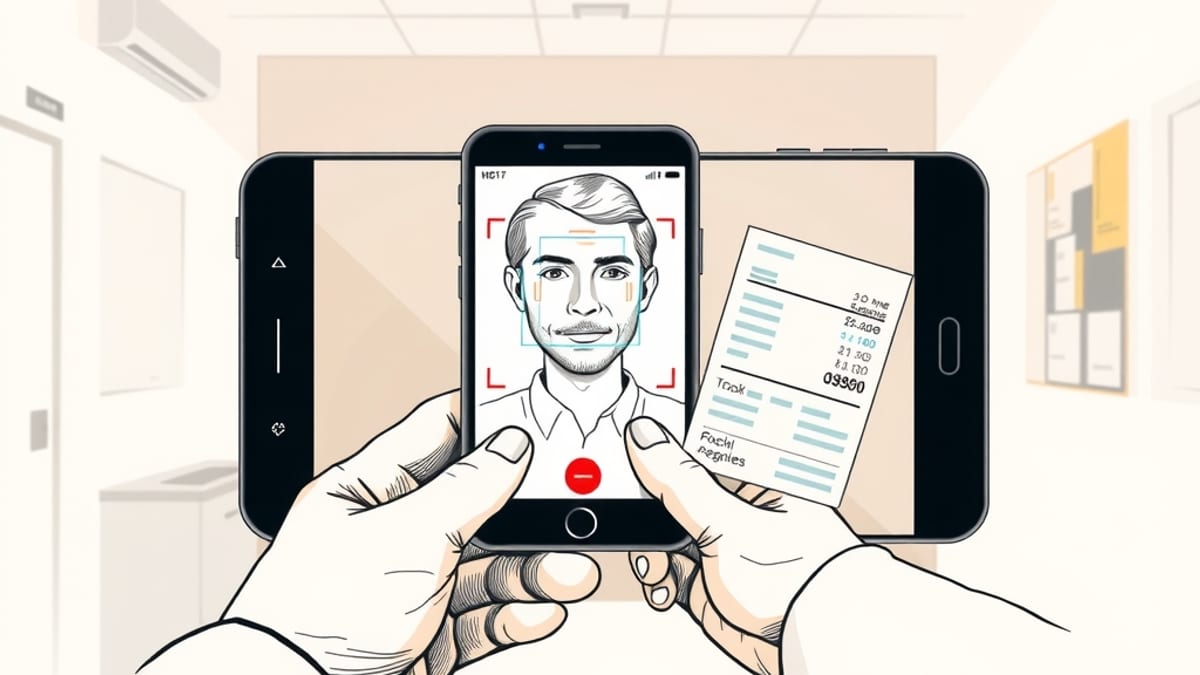
Nolla Health announced on October 5 that its artificial intelligence system, Nolla Derm, is now authorized to issue initial prescriptions for acne in Utah, marking the first time a state has granted such approval for AI. The service, accessible through the Nolla Derm app, is available to Utah residents aged 18 and older, with a monthly subscription starting at $4.99. Nolla Health co-founder and CEO Luis Wenus stated that the initiative seeks to provide care to individuals who might otherwise face long waits or forgo treatment.
The Nolla Derm app guides eligible users through an informed consent process, a 10-to-15-minute intake questionnaire, and a face scan. The AI then analyzes the patient's skin, identifies acne issues, assesses oiliness, and generates an "acne severity score." This score, combined with personal medical information, allows the app to recommend a personalized treatment plan and, if appropriate, an initial prescription from a list of eight approved topical treatments. If the AI cannot confidently select a treatment, the patient is referred to a licensed physician. Medications can be delivered to the patient's home or picked up at a pharmacy. The system also incorporates daily skin scans to track progress, with treatment plans updated monthly based on patient response.
The pilot program in Utah was developed in collaboration with the Utah Office of Artificial Intelligence Policy and underwent multiple rounds of external review by physicians, dermatologists, and state government members. Physician oversight in the program is structured in three stages. For the first 100 patients, two licensed physicians will independently review and approve every AI-generated prescription before it is issued. During the next phase, covering up to 500 patients, the AI will issue prescriptions directly, with physicians conducting a daily retrospective review of these decisions. Following this, physician oversight will shift to a monthly review of at least 10% of the total prescriptions issued. Progression to each subsequent stage requires meeting specific safety targets, including a 95% agreement rate with physicians and no serious adverse events, along with written approval from the state.
Nolla Health emphasized that acne was chosen as the initial condition for AI prescribing due to its well-understood nature, low risk, and extensive clinical evidence. The company highlighted significant gaps in access to dermatology care in Utah, noting that an estimated 100,000 residents experience active acne, but only 10% consult a dermatologist. The average wait time for a dermatology appointment in Utah is 61 days, nearly double the national median, and eleven counties lack any dermatologists. Luis Wenus stated that the Nolla Derm app aims to close this access gap by providing personalized treatment in minutes, at a fraction of the cost of traditional visits.
The Nolla Derm AI system is designed to operate within tightly defined, physician-approved treatment protocols, and it cannot generate free-text prescriptions. Cases involving severe acne, pregnancy, or other conditions outside the pilot's scope are automatically referred to a licensed physician. Nolla Health reported that licensed clinicians agree with the AI's treatment recommendations in over 96% of real-world cases, with any discrepancies typically involving minor adjustments like topical strength. The pilot program is set to run for one year, with the possibility of renewal for an additional two years at the discretion of the Utah Office of Artificial Intelligence Policy.