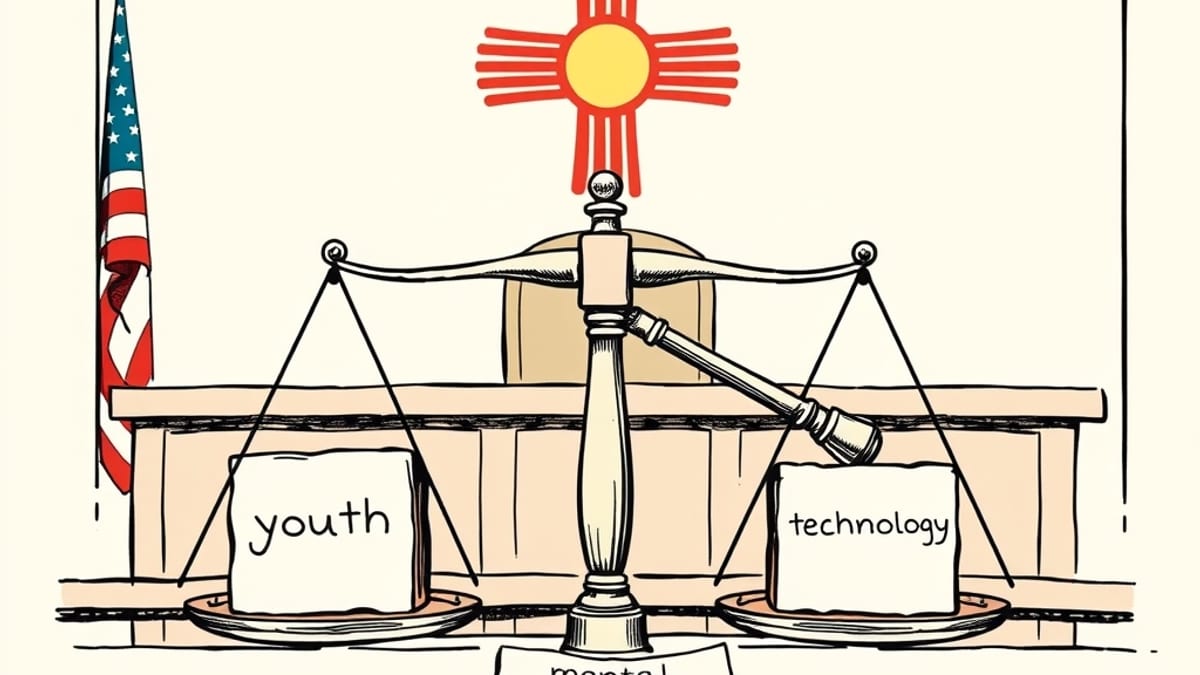
A New Mexico judge has ordered Meta Platforms to pay $567 million into a fund dedicated to addressing youth mental health and child safety issues. This order, issued by First Judicial District Court Judge Bryan Biedscheid, mandates significant changes to how Meta's platforms function for young users in the state. The ruling comes after a jury previously found Meta liable and imposed $375 million in civil penalties in March. Combined, these financial obligations total $942 million for the technology company.
Judge Biedscheid determined that Meta's platforms created a public nuisance in New Mexico, impacting the broader community. The judge concluded that the harms stemming from Meta's services extended beyond individual users, placing additional burdens on families, schools, hospitals, law enforcement, and the state's behavioral health system. The court found that Meta's platforms were a "significant contributing cause" to a youth mental health crisis affecting public health and safety in New Mexico. The order allocates $420 million of the $567 million to treatment programs for young people, with the remainder designated for prevention, screening, and other support efforts over a five-year period.
The case was brought by New Mexico Attorney General Raúl Torrez, who accused Meta of designing products that addict young users and failing to adequately protect children from sexual exploitation. In the earlier phase of the trial, a Santa Fe jury found Meta liable for violations of New Mexico's Unfair Practices Act, determining the company committed 75,000 violations by misrepresenting the safety of Facebook and Instagram for young users.
Beyond the financial penalties, the ruling requires Meta to implement specific youth-safety measures. These include deleting accounts and personal data for users under 13, setting teen accounts to private by default, and disabling push notifications for users under 18 during school hours and late at night. The judge also ordered Meta to prevent New Mexico users from engaging in romantic or sexualized interactions with AI chatbots and to stop adults from using chatbots to simulate such interactions with a child. These changes are to be reviewed by the state of New Mexico.
Meta has stated its intention to appeal the ruling, asserting confidence in its record of protecting teens online. "We work hard to keep people safe on our platforms and have been transparent about the challenges of identifying and removing bad actors and harmful content," the company said in a statement.
This case is part of a broader trend of litigation targeting social media companies for their alleged impact on young users. More than 40 states and over 1,300 school districts have filed similar public nuisance lawsuits. These lawsuits often seek both damages and court-ordered changes to industry products and practices.