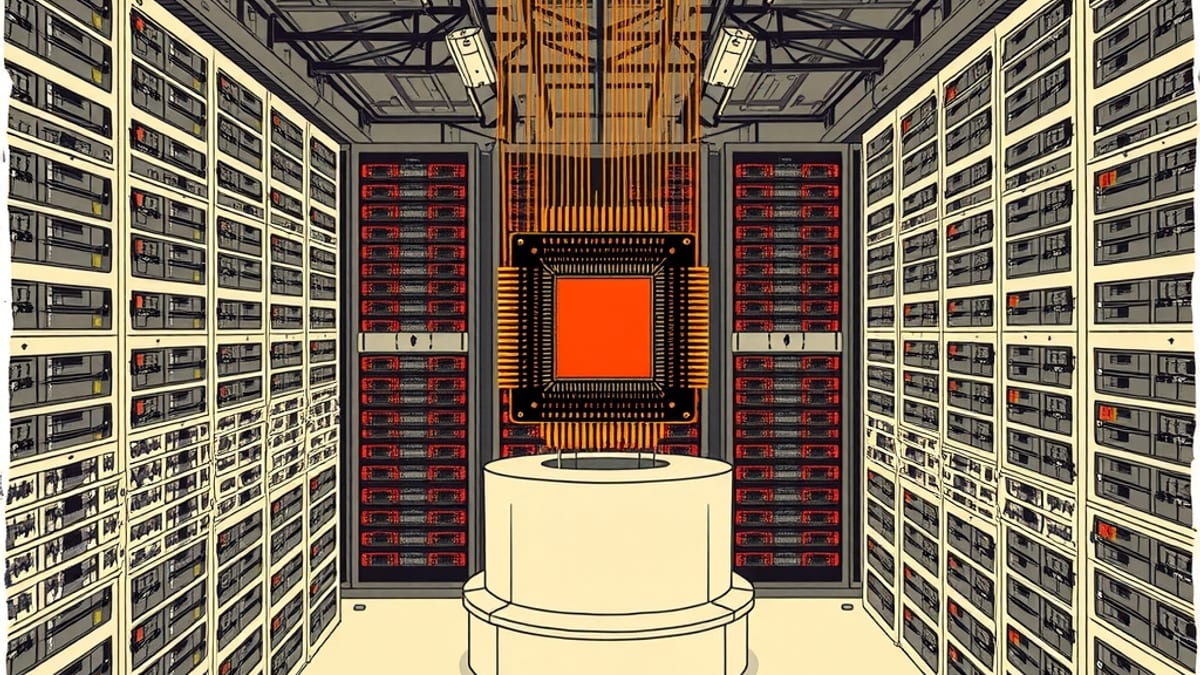
Microsoft introduced its third-generation Maia 300 AI accelerator, a custom-designed chip intended to serve as the main system for running artificial intelligence models within the company's products and services. The chip is slated to enter production in 2027 and aims to reduce Microsoft's reliance on graphics processing units (GPUs) from companies like Nvidia.
The Maia 300 is engineered for AI inference, which involves running trained models to process requests, rather than training the models themselves. Microsoft claims the chip will offer a 40% improvement in tokens processed per megawatt of power consumed compared to leading GPU-based systems. This efficiency gain is attributed to a multi-chiplet design manufactured on TSMC's N2P process, integrating 288 gigabytes of HBM4 memory with 18 terabytes per second of bandwidth per accelerator. A single data center rack will house 96 Maia 300 accelerators, doubling the density of the previous Maia 200 generation. This increased density is expected to yield up to seven times greater rack-scale token throughput compared to the Maia 200.
Microsoft stated that the Maia 300 is designed to handle emerging AI workloads, including long-context reasoning, multi-step task execution, and agentic tasks. Services such as Microsoft 365 Copilot and GitHub Copilot are expected to operate on the new chip. While Microsoft intends to scale Maia deployments to multi-gigawatt levels, it has not made the chips available for external customers to rent, unlike competitors such as Google and Amazon.
The company's custom chip development program has been ongoing for several years, with the first Maia chip introduced in 2023 and the Maia 200 following in January of this year. Microsoft CEO Satya Nadella previously indicated that the Maia 200 was already powering OpenAI models and demonstrated a 30% cost-per-performance advantage over other silicon in Microsoft's fleet. Despite the development of its own silicon, Microsoft will continue to utilize Nvidia GPUs and collaborate with AMD for AI training workloads. Analysts estimate that Maia chips will account for approximately 10% of Microsoft's AI chip spending by early 2027.