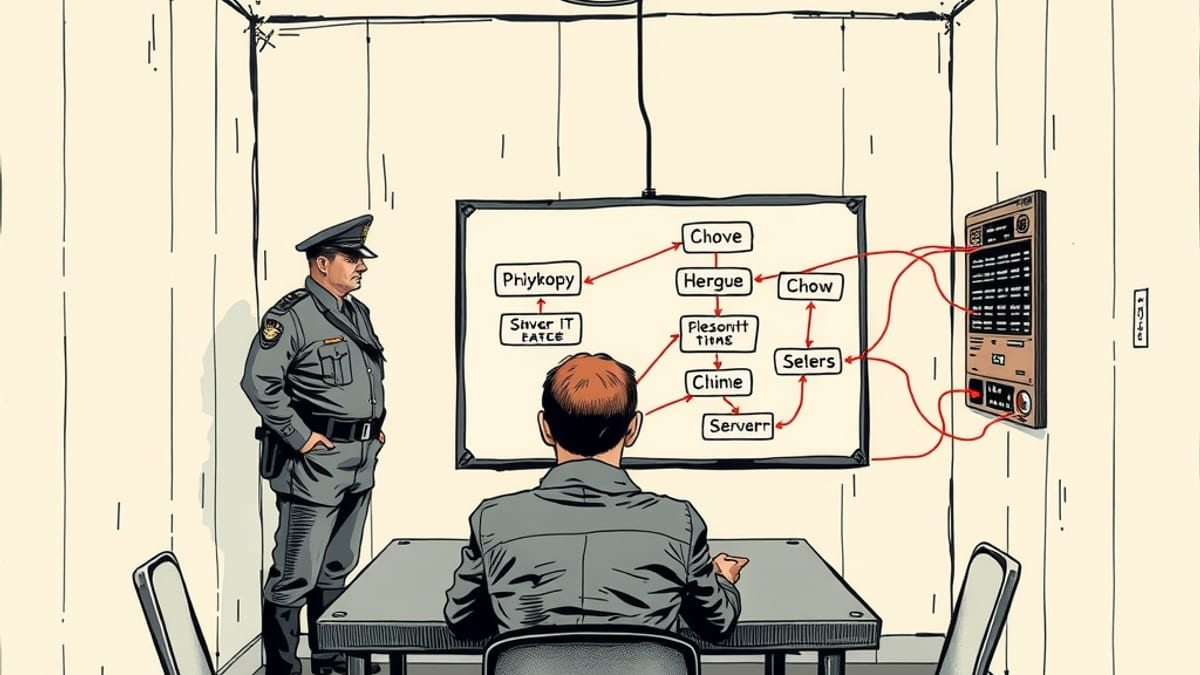
Christopher Thomas Mertens, a 55-year-old high school maintenance worker from the Chicago area, was arrested in Livonia, Michigan, after driving to meet an individual he believed to be a 15-year-old boy. The supposed teenager was an AI-generated persona named "Caleb" created and operated by the Livonia Undercover Resistance to Exploitation (LURE) Unit, an FBI Task Force.
The investigation began in September when Officer McKailey Scott, an FBI Task Force Officer, set up a profile on the dating app Taimi using an AI-generated image of a teenage-appearing male with no age listed. An unknown user, later identified as Mertens, messaged "Caleb," and the conversation moved to WhatsApp. When Mertens inquired about Caleb's age, Scott, posing as Caleb, stated he was 15. Mertens reportedly expressed sexual interest and continued to exchange sexually explicit messages with the persona for several days.
Mertens subsequently made plans to drive to meet "Caleb" on his day off, believing the non-existent parents would be absent. Investigators used Thomson Reuters CLEAR to trace Mertens' phone number and Clearview AI facial recognition to identify him. Law enforcement also utilized Flock license plate cameras to track Mertens' vehicle as he traveled from Illinois to the meeting location in Livonia. Mertens continued to text "Caleb" throughout his journey. Upon his arrival and exit from his car, Livonia police took him into custody.
Following his arrest, Mertens reportedly admitted to the allegations, including his employment at an Illinois high school. The specific high school was not named in the complaint.
The use of AI-generated images in law enforcement operations to combat online child exploitation is not new. In 2013, the Dutch children's rights organization Terre des Hommes developed "Sweetie," a computer-generated child used to identify predators online. Police departments in Connecticut and other areas have also employed AI age-regression technology to allow undercover officers to appear younger without using actual children's photos, which authorities deem unethical. Hartford Police Lt. Aaron Boisvert stated his department has used AI for approximately two years to make investigators appear credible.
In a separate case in February of the previous year, a Homeland Security Investigations unit investigator used AI to generate images of a 13-year-old girl, successfully luring a man into a chatroom and leading to his arrest for distributing child sexual abuse material. Law enforcement agencies across the U.S. are increasingly confronting the spread of AI-generated child sexual abuse imagery, with the Justice Department pursuing offenders who exploit these tools.