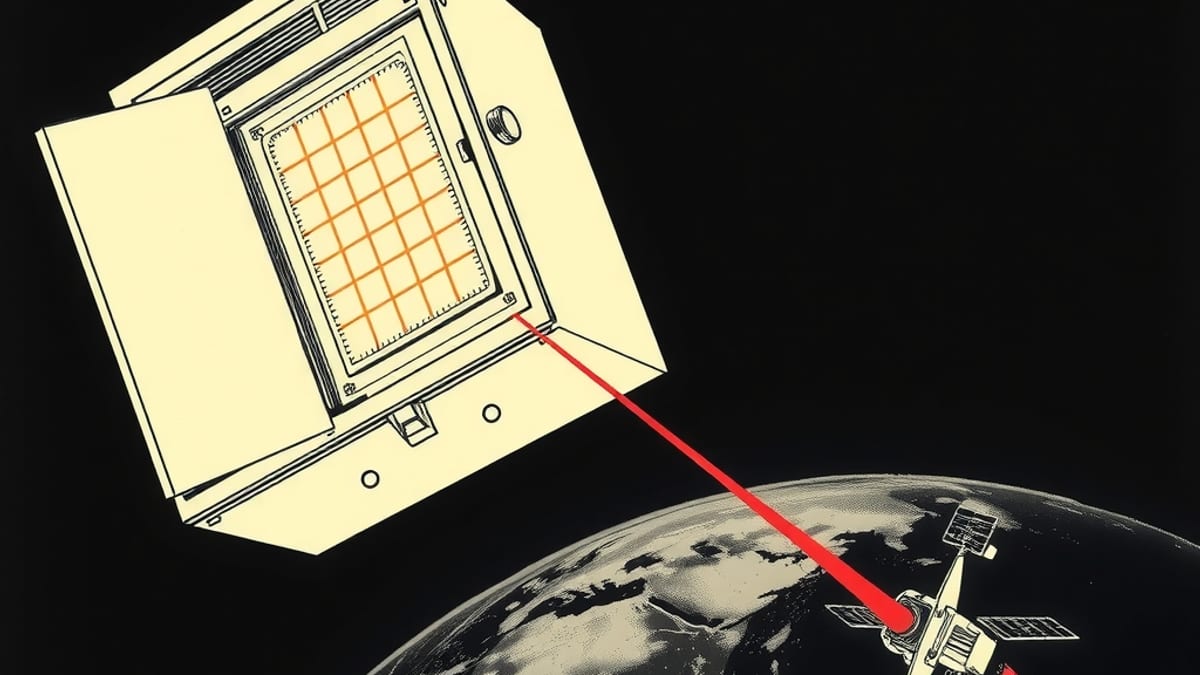
Google is set to launch an experimental satellite equipped with its artificial intelligence chips into space on October 1. The mission, a key step in the company's Project Suncatcher initiative, will test the performance of Google's Tensor Processing Units (TPUs) in the demanding environment of low Earth orbit. This launch represents the first time Google is sending its AI hardware into space.
The satellite, named MVP, is roughly the size of a refrigerator and will travel aboard a SpaceX Falcon 9 rocket as part of the Transporter-18 rideshare mission. Project Suncatcher is Google's long-term research endeavor exploring the possibility of building AI data centers in orbit. The primary goal of this initial flight is to gather data on how the TPUs withstand the physical stresses of launch, as well as the radiation and extreme temperatures encountered in space. Google has conducted extensive ground-based testing, including subjecting its Trillium TPUs to simulated launch vibrations and radiation levels equivalent to five years in orbit. Early results from these tests indicate the chips can tolerate these conditions.
The concept behind Project Suncatcher envisions solar-powered satellites forming large-scale AI computing clusters in orbit. Proponents suggest that satellites in low Earth orbit can access near-constant sunlight, potentially generating up to eight times more solar power than terrestrial solar panels. This could alleviate the strain on Earth's power grids, which are already facing increased demand from AI computation. However, significant engineering challenges remain, including developing high-bandwidth inter-satellite communication links and managing heat dissipation in a vacuum. Google plans to test laser-based communication links between satellites in future missions, with two prototype satellites scheduled for launch in early 2027.
Experts acknowledge the ambitious nature of orbital data centers. Some estimate that thousands of satellites would be required to match the capacity of a single terrestrial data center. Furthermore, the costs associated with launching and maintaining such infrastructure are substantial. Google has stated that this initial mission is focused on learning and identifying potential failure points, rather than demonstrating an operational orbital data center. The company estimates that orbital data centers could achieve cost parity with ground-based facilities by the mid-2030s.