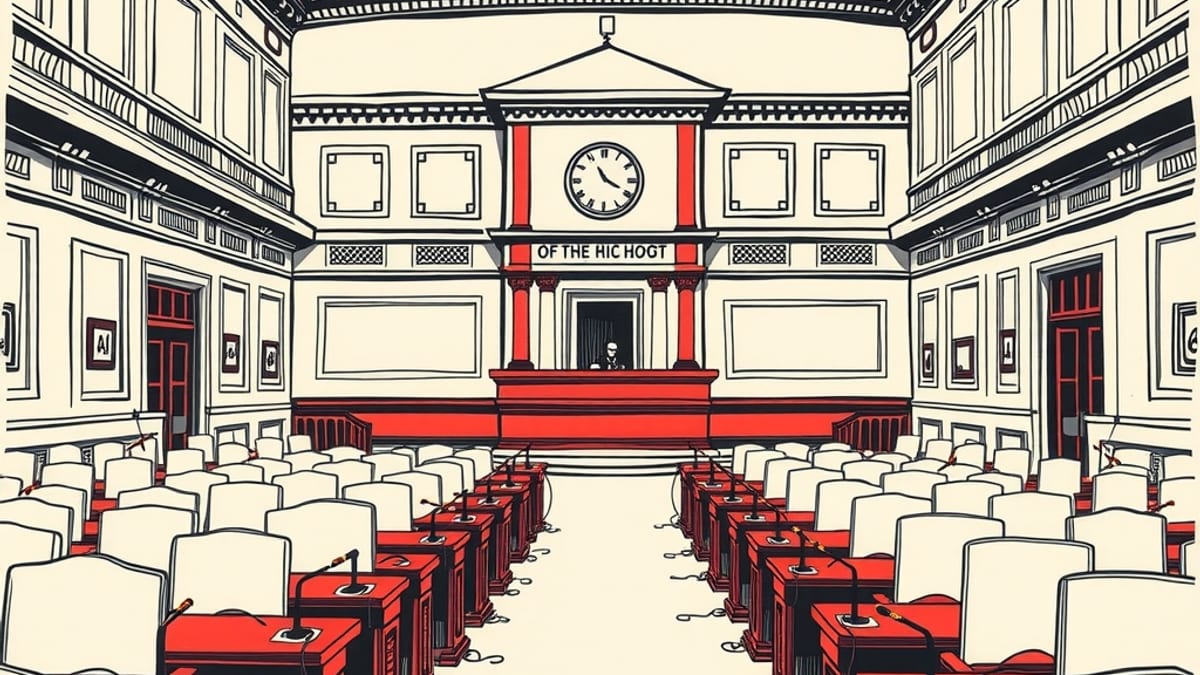
Bill Gates, in a 6,000-word essay titled "The turbulent AI era is here. The choices we make are critical," has introduced the concept of "human reserved" jobs, likening them to nature reserves established to protect environmental areas. This proposal suggests that certain occupations should be intentionally set aside for human workers, even as AI and robotics advance in capability. Gates articulated this idea as a means to mitigate the substantial job losses he anticipates as AI begins to outperform humans across a broad spectrum of tasks. He noted that this is his first extensive piece on AI in three years, reflecting a shift in his perspective on the technology's potential downsides.
Gates cited the care his father received before his death from Alzheimer's disease as an example of an "irreplaceably human" role. He questioned the appropriateness of a robot delivering news of an incurable illness, despite the technical feasibility. The essay suggests that decisions to designate jobs as "human reserved" could be driven by economic factors, such as preventing the displacement of a large number of workers who cannot easily transition to new roles. Other factors, like the need for human empathy in sensitive situations, would also play a role. Gates indicated that the "human reserved" domain would evolve over time, potentially involving a gradual phasing in of AI in some areas with a commitment to preserving human jobs. Fields such as education and mental health care are envisioned as mixed environments, with humans overseeing and extending their capabilities through technology.
Beyond job displacement, Gates raised concerns about the overall preparedness of governments for the scale of AI's impact. He argued that a "monumental task" lies ahead in creating domestic and international frameworks to address AI. Gates drew a parallel to the post-9/11 reorganization of the U.S. government, stating that AI would necessitate an even broader restructuring, affecting national security, employment, education, taxation, energy, elections, public health, and the financial system. He questioned whether current global institutions are equipped to design and implement this new architecture.
Gates also suggested that cooperation between the United States and China would be necessary for global efforts to mitigate AI risks. His staff are reportedly working to arrange a meeting with Chinese President Xi Jinping in November to discuss these global mitigation efforts. Gates last met with Xi three years prior.
The essay also touched on the potential impact of AI on education, warning that while it could enable greater learning, it might also lead to a decrease in critical thinking. He referenced a preliminary survey suggesting a correlation between heavier AI use and reduced critical thinking skills.
Gates's perspective represents a shift from his previous optimism regarding AI's downsides, which he once believed were manageable. He stated that his belief waned as AI capabilities in software coding and cyberattacks surpassed his expectations. He now plans to dedicate a significant portion of his time to addressing AI's problems, even if it means less focus on his philanthropic work with the Gates Foundation. Gates emphasized that the AI industry cannot regulate itself and called for a leading role from the U.S. government in addressing risks to national security, jobs, and children's well-being. He described his call as "shrill" and expressed a desire for bipartisan action, acknowledging that his past association with Jeffrey Epstein might lead some to disregard his opinions. He reiterated his regret for his interactions with Epstein.
Other policy proposals outlined by Gates include rebalancing how labor and capital are taxed. He suggested taxing AI tokens and robots, similar to payroll taxes on human earnings, to slow the rapid shift away from human labor and generate funds for retraining programs and a stronger social safety net. He stressed the importance of targeting such taxes to avoid hindering beneficial AI applications, such as those in medicine and education. Gates concluded his essay by urging leaders to act now, before widespread unemployment and erosion of public trust, to ensure AI benefits everyone.