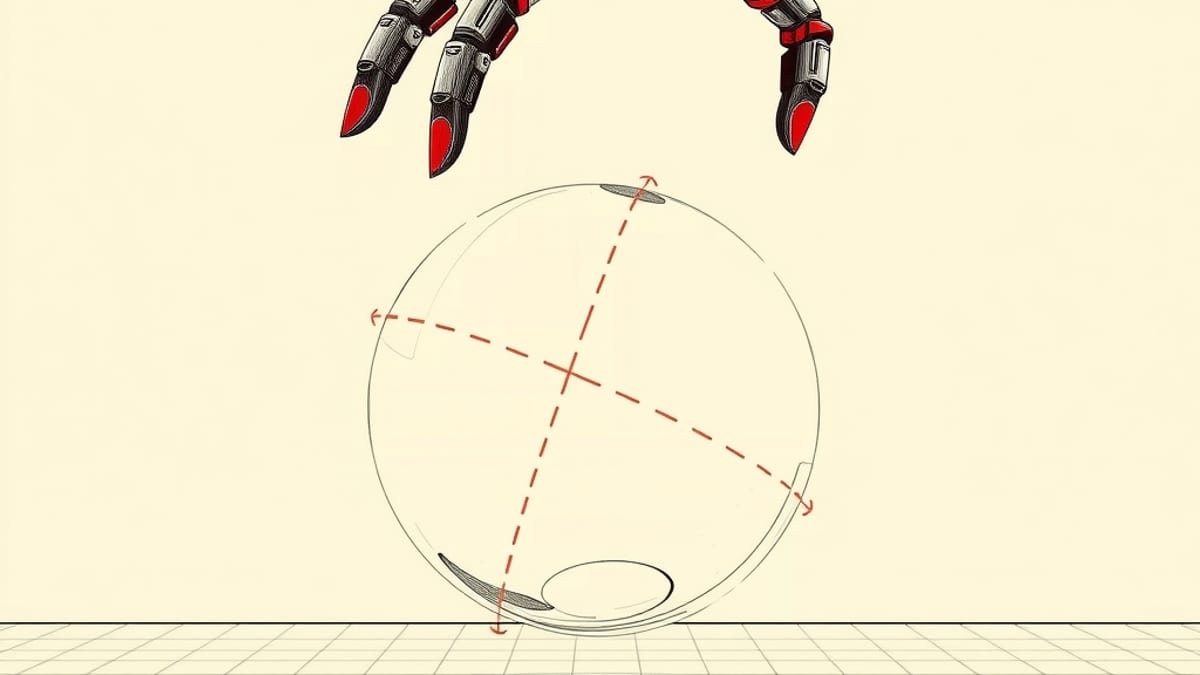
Researchers have introduced DreamTrue, a multi-view, cross-embodiment robot world model designed to improve the fidelity of video prediction for robotic actions. The model addresses two primary challenges in training robot world models: imprecise calibration, which can hinder accurate action following, and limited data on unsuccessful interactions, which can bias predictions towards only successful outcomes.
To enhance action following across different robot bodies, DreamTrue converts action trajectories into image-space conditions. It then employs an offline geometric calibration method to align these conditions with recorded videos. This calibration process helps correct for sensor calibration discrepancies, allowing the model to interpret visual cues consistently regardless of the robot's physical form. The researchers stated that this method improves alignment on 97.1% of AgiBot episodes and 91.6% of DROID episodes. They have released calibration data for over 153,666 episodes across three datasets, totaling more than 1,660 hours of footage.
To broaden the range of interactions covered in training, DreamTrue incorporates a technique called counterfactual post-training. This involves modifying recorded action trajectories and generating future videos that depict a wider array of actions and contact configurations, including those that might lead to unsuccessful outcomes. Since ground-truth video for these counterfactual scenarios does not exist, the researchers developed a human-annotated video dataset that identifies robot, object, and interaction defects. This dataset was used to train an embodied video reward model. The scores from this reward model then guide reinforcement learning during post-training, pushing the model toward predicting more physically plausible interaction outcomes.
This approach tackles the "optimistic hallucination" problem often seen in robot world models, where models trained on successful demonstrations tend to predict successful outcomes even when the robot's action should logically fail. The counterfactual post-training stage utilized 9.86 hours of data, which is a small fraction compared to the 2,232 hours used for the base model training.
On the AgiBot benchmark, DreamTrue demonstrated improved action following and reduced the human-assessed interaction defect rate from 48.12% to 6.25%. The model secured first place in the world model track of the AgiBot World Challenge 2026. This development suggests that aligning actions in image space and augmenting training data with counterfactuals can significantly improve the reliability of robot world models as simulators for policy evaluation.