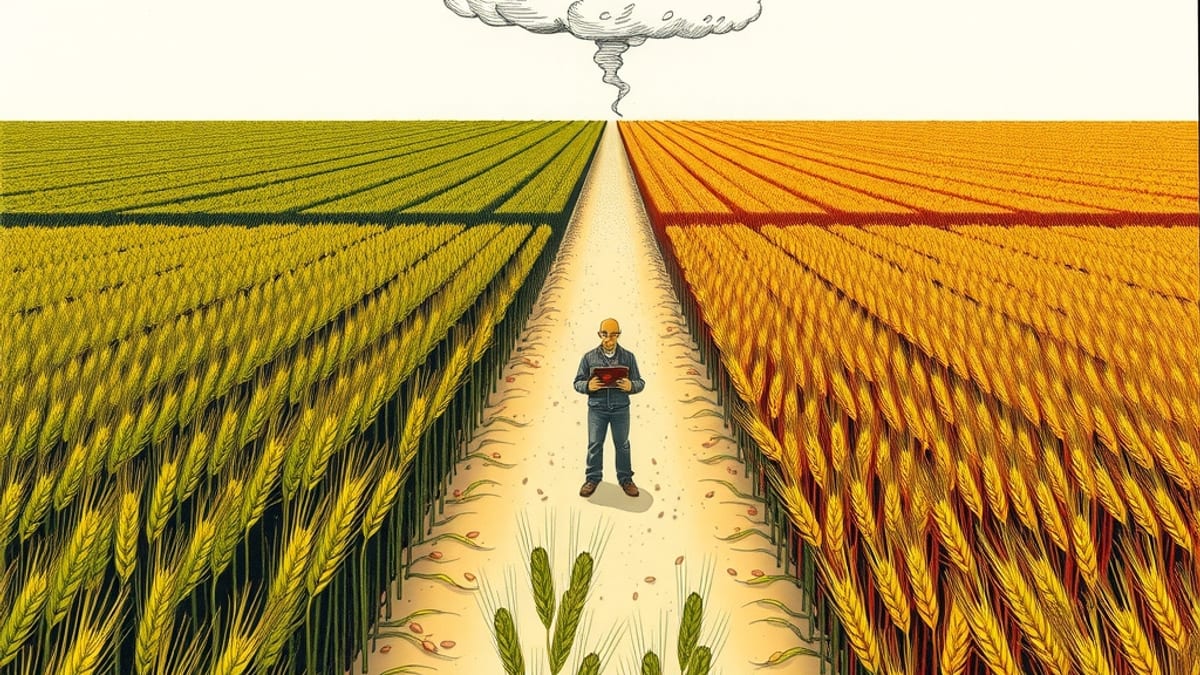
Researchers have developed an artificial intelligence model, WxCrop, capable of predicting agricultural crop losses caused by extreme weather events with a lead time of several days. This novel agentic AI system integrates physically interpretable weather indices with causal analysis and historical agricultural and insurance data to provide reliable loss estimates. Traditional weather forecasts often indicate where a storm will strike but lack detail on specific agricultural impacts, such as which crops will be affected or the extent of the damage. WxCrop aims to bridge this gap by offering more actionable insights for governments, growers, and scientists.
The WxCrop model was demonstrated using data from Florida, focusing on hurricanes, freezes, and dry heat events. For each hazard, a specific loss model was calibrated using insurance records. The system first maps weather patterns and crop locations, then computes a composite hazard index to quantify the severity of the weather event. This index rises with the potential damage. For instance, during Hurricane Ian in 2022, the model's hurricane index accurately identified the storm's path and severity in DeSoto County. The model's reliability was tested through three checks: it detected recorded cyclone days with an area under the curve (AUC) of 0.98, reproduced recorded losses in held-out years to within 2%, and confirmed county-level rankings with independent production records showing a rank correlation of 0.63.
The development of WxCrop addresses a significant challenge in agriculture, where climate-related hazards have caused substantial economic losses. Between 1991 and 2023, global agriculture lost an estimated US$3.26 trillion due to disasters, with climate hazards accounting for nearly US$2.9 trillion of this total. The researchers highlight that early warning systems can yield significant returns, with anticipatory actions returning up to seven dollars for each dollar invested. WxCrop's ability to provide localized, crop-specific loss predictions can enable more targeted and timely responses to agricultural disasters. Users can query the agent for the estimated loss of each crop group as a fraction of its expected season value, with all figures traceable to their data sources.
The researchers have indicated that the WxCrop workflow is designed to be extensible to other regions and hazards. By substituting local data sources and refitting the model, the system could be adapted for use across the United States and potentially globally. Future refinements may involve incorporating more granular data and exploring additional environmental factors that influence crop yields. This advancement comes as other research also explores AI agents for weather and climate analysis, such as the Zephyrus agent developed at the University of California San Diego, which aims to improve natural language interaction with complex weather forecasting data.