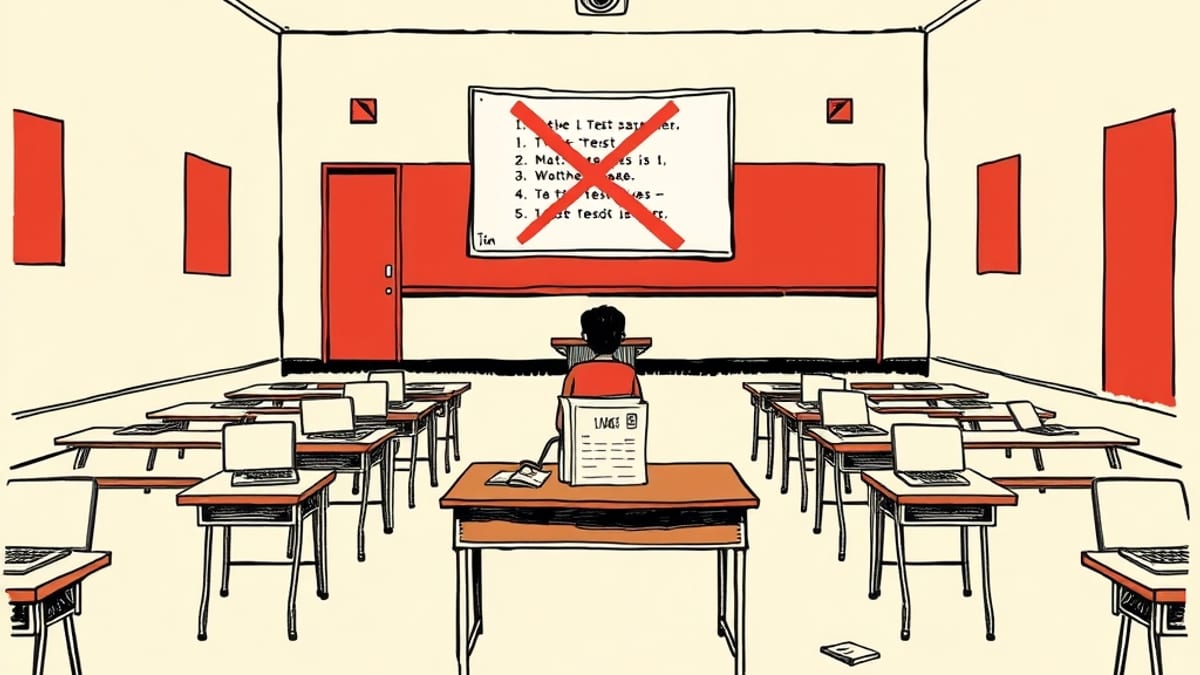
The National Autonomous University of Mexico (UNAM) will require approximately 58,000 applicants to retake their undergraduate entrance examinations due to failures in the AI-powered remote supervision system. University officials initiated an investigation after detecting a significant increase in perfect scores during the online testing period held in May and June. This marks the first year UNAM utilized an online format for its entrance exams, a change intended to improve accessibility for students outside Mexico City.
The investigation revealed that the percentage of students scoring 100% or more correct answers rose from an average of 3.5% between 2021 and 2025 to 16.3% this year. The AI system employed to monitor test-takers flagged instances of phone use, external assistance, and identity substitution. A technical committee established to review the admissions process concluded that these statistics cast serious doubt on the integrity of the examinations. Consequently, UNAM has filed a formal complaint with authorities and recommended that the exam be retaken in person.
The new examination will be mandatory for students who had already been notified of their acceptance, as well as for rejected applicants whose scores met or exceeded the lowest passing score from the previous four years. The university has not yet announced the date or location for the rescheduled test, but confirmed it will be a pen-and-paper, in-person assessment. Rector Leonardo Lomelí apologized to students who had received acceptance notifications, stating that the measure is necessary to ensure transparency, certainty, and equitable access to the university. Student reactions have been divided, with some advocating for a complete re-examination and others supporting the original results.
The incident at UNAM highlights growing concerns about the reliability and fairness of AI-driven proctoring systems in academic settings. These systems, which monitor students remotely via webcams, microphones, and screen activity, aim to detect cheating. However, they have faced criticism for potential biases, privacy violations, and the risk of falsely flagging innocent behavior. For example, AI systems may misinterpret atypical movements or facial expressions, leading to unwarranted suspicions, particularly for neuro-atypical students or those with unique exam-sitting styles. The use of AI in exams has also raised ethical questions regarding student autonomy and privacy, as the technology can monitor personal environments and behaviors.
Previous incidents have underscored the challenges associated with AI proctoring. In one case, a student received a failing grade after an AI system flagged her for reading a question aloud, an action that did not constitute cheating. Another instance involved a student failing an exam due to AI flagging, with university officials providing conflicting explanations that left students struggling against bureaucratic processes and machine assessments. These issues have led some educational institutions to reconsider their reliance on AI proctoring.
In response to the increasing sophistication of AI tools, some universities are returning to traditional in-person, paper-based examinations. Institutions in Australia and the United States, particularly in professional programs with high-stakes assessments, have expanded supervised written exams, citing AI concerns as a primary driver. While some argue that students should be assessed on their ability to work with AI, others believe employers still prioritize innate abilities, necessitating traditional testing methods to ensure integrity. The debate continues regarding how to best assess students in an era where AI tools are becoming more prevalent and harder to detect.