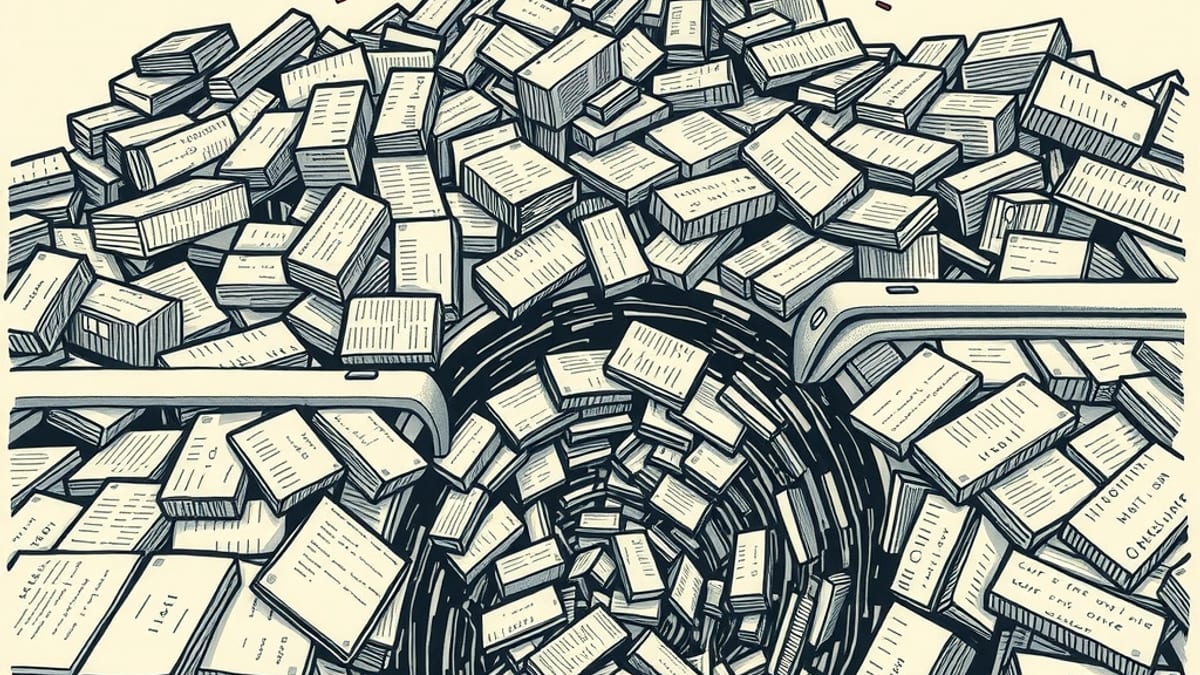
Software firms adopting AI coding agents have seen a substantial rise in code production, but this has not translated into a statistically significant increase in the completion of software tasks. A study by Harvard researchers Fiona Chen and James Stratton analyzed engineering activity data from over 700 software firms between 2021 and March 2026. The findings indicate that while AI agents boost code output, the gains are absorbed by the human code review process, creating a bottleneck that limits overall throughput.
Firms that introduced AI coding agents experienced an average increase of 30% in lines of code, 20% more commits, and 23% more pull requests. However, these metrics of activity did not correlate with a corresponding improvement in resolving tracked issues or larger software features, as measured by tools like Jira. The average time from submitting a pull request to its merge into the codebase rose by 49%. Furthermore, the proportion of pull requests requiring changes nearly doubled, and comments per pull request increased by 35%. This surge in review demands led to a 14% increase in the share of employees performing code reviews.
Researchers interpret these results as a downstream bottleneck, where the efficiency gained in code writing is consumed by the increased effort needed for human review and integration. Although 80% of the measured firms used some form of AI code review by March 2026, AI agents accounted for only 23.3% of review comments and 10.8% of pull requests, indicating that human oversight remains dominant in the review process. The study suggests that to realize the full benefits of AI-driven code generation, companies may need to expand their review capacity or develop more advanced automated testing and verification frameworks. The researchers also noted that AI agents are a relatively new technology, and many firms are still learning how best to deploy them, implying that the observed trade-offs between coding and review time could evolve.